Discover the Classic Game That Made a Surprise Comeback in "The Mandalorian and Grogu"!
Unraveling the Mystery: The Blatant Yet Concealed Reference
In the vast expanse of the Star Wars galaxy, where every new film is meticulously scrutinized for connections to its predecessors, "The Mandalorian and Grogu" presented a uniquely obvious, yet initially overlooked, link to its heritage. While enthusiasts often search for subtle nods and intricate lore details, the most significant hidden gem was openly displayed for all to see.
Rotta the Hutt's Colosseum: A Familiar Setting
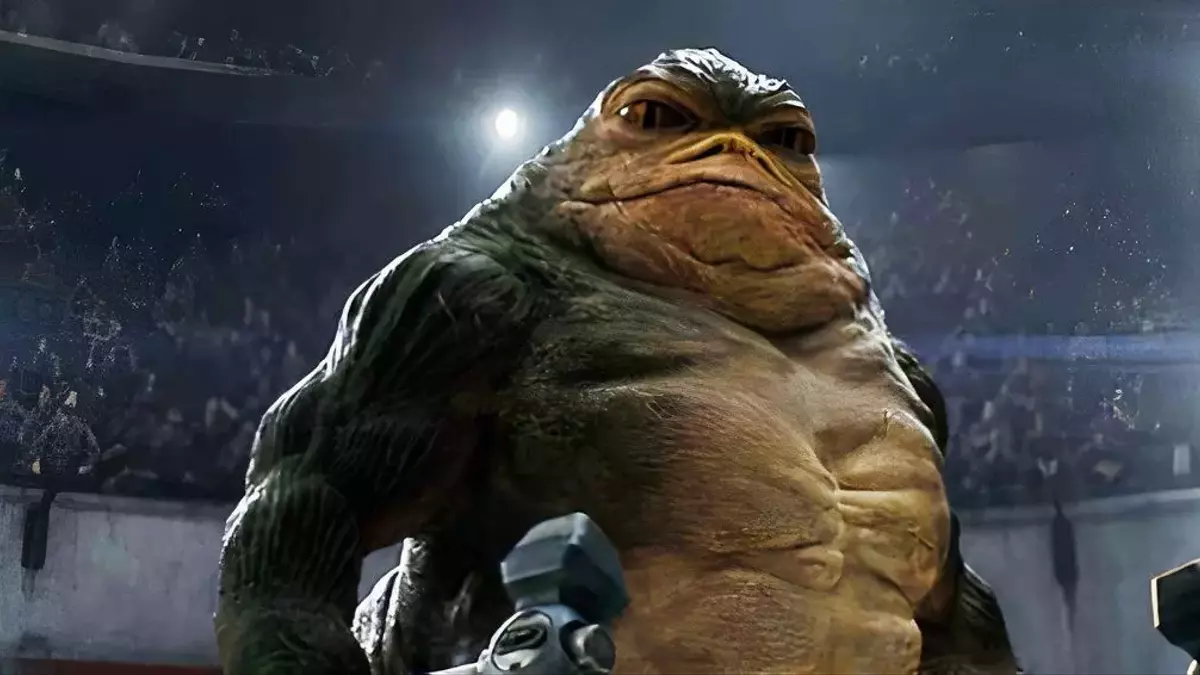
The story unfolds with the Mandalorian undertaking a mission for the Hutt twins, siblings to the late Jabba, to locate Jabba's son, Rotta. Upon finding Rotta, he's discovered to be the star attraction of a brutal, gladiatorial-style combat arena. Here, he battles a variety of formidable adversaries and monstrous creatures.
Echoes of Ancient Arenas: More Than Just a Fight Scene
Initially, Rotta's combat sequence might seem typical of many cinematic battlegrounds, drawing comparisons to scenes from films like "Thor: Ragnarok" or the iconic Petranaki Arena from "Attack of the Clones," where legendary figures such as Obi-Wan Kenobi and Anakin Skywalker famously engaged the Beasts of Geonosis. However, as the perspective broadened after one of Rotta's intense skirmishes, a familiar pattern emerged. The arena floor revealed a distinctive black-and-white checkered design, strikingly reminiscent of the board from the holographic game played by R2-D2 and Chewbacca in the very first Star Wars movie, where C-3PO famously quipped, "Let the Wookiee win."
Dejarik: From Game to Grand Spectacle
This holographic board game, affectionately dubbed "Holochess" by fans, is officially known as Dejarik within the Star Wars universe. Although it first appeared in 1977, its formal name, Dejarik, wasn't established until a 1995 role-playing game. Its prominence grew with a 2000 Chewbacca action figure, "Chewbacca: Dejarik Champion," which included the game as an accessory. Intriguingly, in "The Mandalorian and Grogu," the Mandalorian himself labels the confrontation as a "Dejarik match," directly connecting the gladiatorial spectacle to the beloved game.
The Evolving Lore of Dejarik: Canon Versus Legends
According to the official Star Wars Wiki, Dejarik is recognized in current canon as a game pre-dating the Clone Wars, with its deeper history largely unexplored. Yet, in the pre-Disney "Star Wars: Legends" continuity, Dejarik was originally a Jedi game. For this origin to regain canonical status, it would require re-establishment within a Disney-produced project. The cinematic portrayal in "The Mandalorian and Grogu" introduces new layers to its background, possibly suggesting that the competitive matches like Rotta's either inspired the board game or were, conversely, influenced by it, much like popular board games today inspire game shows.
Wookiee Wisdom: A Universal Truth
Regardless of Dejarik's precise origins or its evolution within the Star Wars narrative, one enduring characteristic remains consistently true across all its forms: Wookiees, it seems, are perpetually adverse to losin