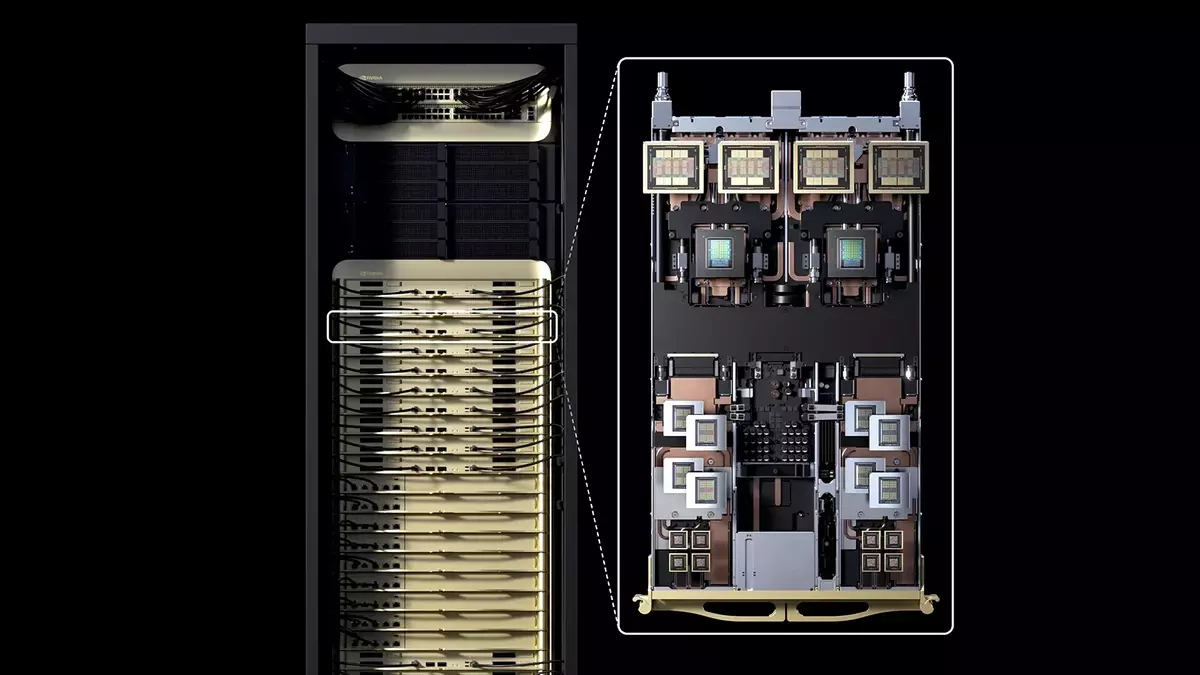
Nvidia's groundbreaking Rubin CPX, initially heralded as the company's first GPU specifically engineered for AI inference, appears to be encountering significant challenges, with industry whispers suggesting a potential cancellation or indefinite postponement. This unforeseen turn of events could, remarkably, translate into favorable outcomes for PC gaming enthusiasts by easing supply pressures on crucial components.
Nvidia's AI Strategy Shifts: Rubin CPX Faces Setbacks, Groq Partnership Takes Center Stage
Last September, Nvidia unveiled Rubin CPX as a significant addition to its expansive AI portfolio, designed exclusively for AI inference tasks. However, recent reports from Korean publication The Elec indicate that the project has stalled, citing a notable absence of orders for essential components such as printed circuit boards (PCBs) and GDDR7 DRAM modules, traditionally vital for such installations. This contrasts sharply with the robust demand observed for Nvidia's Vera CPU and the standard Rubin GPU.
Unlike other high-performance AI superchips like Vera Rubin and Blackwell, which utilize high-bandwidth memory (HBM) to meet the intense demands of AI training, Rubin CPX was designed to incorporate 128 GB of GDDR7 directly onto its PCB. The current silence surrounding GDDR7 orders strongly implies that Nvidia has either put the project on hold or abandoned it entirely, despite initial projections for availability by the end of this year.
A primary catalyst for this shift is believed to be Nvidia's substantial $20 billion non-exclusive technology licensing agreement with Groq, a company renowned for its language processing unit (LPU) design. Groq's LPUs are purpose-built for inference workloads and notably do not rely on GDDR7, instead utilizing 500 MB of internal SRAM. Nvidia has publicly stated its intentions to integrate Groq's LPU technology into its broader Rubin platform, suggesting a strategic pivot away from the GDDR7-dependent Rubin CPX.
This strategic realignment by Nvidia carries potential benefits for the PC gaming market. By reducing the demand for GDDR7, the absence of Rubin CPX could mitigate potential supply shortages and price increases for memory components. This, in turn, might help stabilize prices for Nvidia's forthcoming GeForce RTX 50-series graphics cards, which are expected to utilize GDDR7. While the broader market continues to grapple with what some have dubbed the 'RAMpocalypse'—a period of elevated RAM and SSD prices driven by persistent AI demand—any relief in component pricing is a welcome development for consumers.
From a gamer's perspective, the potential shelving of the Rubin CPX could be viewed as a silver lining. In an era where AI's insatiable appetite for advanced memory threatens to drive up hardware costs across the board, any factor that eases component supply strains is positive. This development underscores the intricate interplay between the burgeoning AI sector and the consumer hardware market, demonstrating how strategic shifts in one domain can create ripple effects, offering unexpected advantages in another. It's a reminder that even in challenging times, market dynamics can sometimes align to offer unexpected benefits.