
Unlocking Microsoft's Potential: Navigating Market Dynamics for Future Growth
Understanding Microsoft's Current Market Performance Amidst Innovation
Microsoft's stock has experienced an unexpected decline of nearly 19% since the beginning of the year, closing recently at $390.49. This dip comes despite impressive growth in its Azure cloud segment, which expanded by 40%, and its AI business, which now boasts an annual revenue run rate of $37 billion. The company's commercial backlog has also seen a substantial increase, almost doubling to $627 billion. This creates a puzzling scenario where a technologically innovative and expanding company sees its market value decrease.
Key Factors Contributing to Microsoft's Recent Stock Downturn
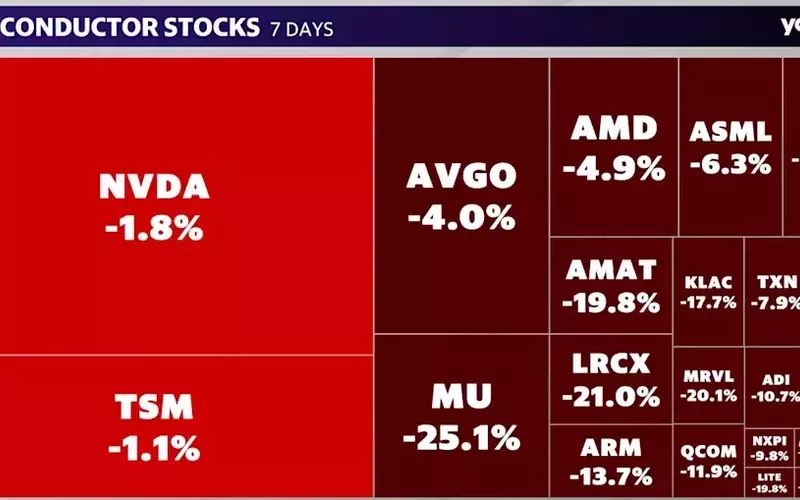
The stock's underperformance, particularly its 11.52% drop over the last month and a 19.85% decline over the past year, is more significant than its beta of 1.13 would typically suggest. Two primary forces appear to be influencing this trend. Firstly, there's been a substantial increase in capital expenditure, which surged by 84% to $30.88 billion in the most recent quarter, with returns on these investments anticipated several years down the line. Secondly, losses from investments in OpenAI have escalated, reaching $3.1 billion in the first quarter of fiscal year 2026, a sharp increase from $523 million a year prior. Furthermore, a broader market sell-off affecting 'Magnificent 7' mega-cap stocks has also contributed to lower valuations across the board.
Expert Projections: Wall Street vs. Conservative Models for Microsoft's Stock
Analysts on Wall Street maintain an optimistic stance, with a consensus target price of $561.11, suggesting a potential upside of approximately 44%. The vast majority (95%) of analysts rate the stock as either a 'Strong Buy' or 'Buy,' with none issuing a 'Sell' rating. However, a more conservative analytical model projects a target of $500.63 within the next twelve months, indicating a 28.21% upside with a 90% confidence level. This more tempered forecast accounts for a 'mega-cap dampener,' reflecting the slower re-rating typical of companies with market capitalizations as large as $2.9 trillion.
Charting the Course to a $500 Valuation for Microsoft Shares
To reach the $500 mark from its current price of $390.49, Microsoft's stock would need to climb by 28%. Given a forward earnings per share (EPS) of $18.89, a $500 price would imply a forward price-to-earnings (P/E) ratio of 27x. The more conservative model's target of $500.63 already assumes a P/E of 24x, suggesting that achieving the bolder $500 target necessitates an additional 2.4x multiple expansion. Microsoft has consistently surpassed EPS estimates for four consecutive quarters, with earnings growing 23.4% year-over-year. The AI business's annual run rate of $37 billion represents a 123% year-over-year increase, and commercial committed revenue (RPO) of $627 billion, up 99% year-over-year, underpins several years of future revenue.
Analyzing Microsoft's Current Valuation Against its Earning Power
At its current price of $390.49 and a forward EPS of $18.89, Microsoft trades at 21 times forward earnings. This represents a discount compared to its trailing P/E of 23 and is also below the typical valuations for mega-cap software companies. The company boasts a strong operating margin of 45.62% and a return on equity (ROE) of 33.28%. The stock is currently 11% above its 52-week low of $349.20 but 29% below its high of $551.05. Despite these fluctuations, its ten-year return of 763.3% highlights its long-term compounding strength, suggesting that it trades at a discount relative to historical multiples for a top-tier software enterprise.
The Feasibility of Microsoft Reaching the $500 Milestone
Attaining a $500 stock price, which requires a 28% increase from its current level, is considered a realistic base-case scenario. This projection hinges on three critical conditions: sustained Azure growth near 40%, a rise in forward EPS estimates towards $20, and the stabilization of mega-cap multiples as the AI capital expenditure cycle demonstrates returns. Potential derailers include a slowdown in enterprise AI adoption coupled with margin compression driven by increased capital expenditures. The blueprint for Microsoft to hit $500 by 2027 involves these factors aligning favorably.