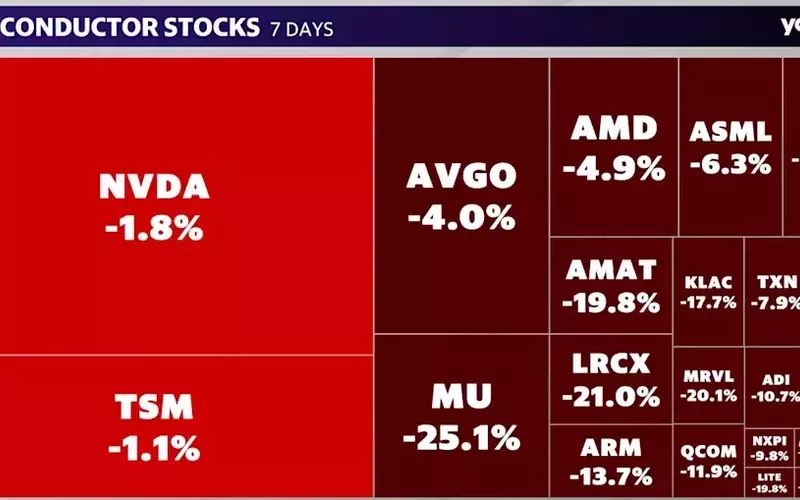

The artificial intelligence memory sector, once a thriving segment of the market, has recently entered a bear market phase. Key players in this industry, such as Micron, Samsung, and SK Hynix, have seen their stock prices fall by over 20% from their previous highs. This downturn has transformed a highly favored investment theme of 2026 into a challenging environment for investors, even as Samsung reported exceptional profits that failed to reassure the market. The widespread sell-off indicates a shift in investor sentiment, moving from enthusiastic buying to a more cautious and pessimistic outlook regarding the future prospects of these high-growth stocks.
This market correction is not confined to just a few memory-related companies; it has spread across the broader semiconductor industry. Since late June, semiconductor stocks tracked by Yahoo Finance have collectively lost an estimated $1.5 trillion in market capitalization. Micron alone accounted for a substantial portion of this loss, with its value decreasing by nearly $350 billion during the same period. Other prominent companies like SanDisk, Intel, Applied Materials, and Lam Research have also sustained significant losses, each exceeding $100 billion. The sell-off's pervasive nature underscores a broader reevaluation of the semiconductor market, challenging the long-standing bullish sentiment that propelled these stocks to record highs earlier in the year.
The AI Memory Market's Sudden Downturn
The AI memory trade, which had been a top performer in 2026, has suddenly faced a significant reversal. Major memory chip producers like Micron, Samsung, and SK Hynix, along with the Roundhill Memory ETF, have all experienced declines exceeding 20% from their recent peak closing prices. This abrupt shift has pushed a previously buoyant sector into a bear market territory, occurring despite strong financial results from companies such as Samsung, whose record-breaking profits did not manage to impress investors sufficiently to prevent the sell-off. The market's reaction suggests that even robust earnings might not be enough to sustain high valuations when broader investor confidence wanes.
The current market correction in AI memory stocks marks a critical turning point compared to earlier dips, which were quickly absorbed by eager buyers. This time, however, the downturn has proven more persistent and extensive, pushing leading companies past the bear market threshold. While the AI memory trade is not entirely defunct, still holding a median gain of nearly 60% since March and accumulating approximately $5 trillion in market value over that period, the recent events indicate a significant recalibration of market expectations. Upcoming events, such as the planned US listing of SK Hynix, are now seen as crucial tests of market sentiment rather than guaranteed successes, prompting investors to question how much positive news has already been factored into current stock prices. The persistent demand for memory chips remains, but investor patience has clearly diminished.
Broader Implications for the Semiconductor Sector
The impact of this downturn extends beyond specialized memory names, engulfing a wider array of semiconductor stocks. Data from Yahoo Finance reveals that the semiconductor industry has collectively shed around $1.5 trillion in market value since June 25. This includes substantial individual losses, with Micron's valuation decreasing by almost $350 billion, and other industry stalwarts like SanDisk, Intel, Applied Materials, and Lam Research each losing over $100 billion. The broad scope of the sell-off highlights a systemic concern within the chip industry, challenging the previously strong growth narrative that characterized the sector.
Furthermore, the market correction has spread to a diverse group of semiconductor companies, with twenty-five names in the sector experiencing declines of at least 20% since June 25. Companies such as Western Digital, Seagate, Teradyne, ON Semiconductor, and GlobalFoundries are among those affected. While the broader PHLX Semiconductor Index has not yet entered a bear market, requiring an additional 9% decline from recent levels, the severe correction in memory stocks is acting as a primary indicator of stress. This widespread revaluation underscores a more cautious investment environment, suggesting that the era of rapid, unchecked growth in semiconductor valuations may be undergoing a significant pause.