
In the realm of filmmaking, director Jon Erwin has emerged as a proponent of integrating artificial intelligence to enhance production capabilities, as showcased in his historical drama 'Young Washington.' Facing the challenge of depicting a perilous icy river scene without compromising actor safety or exceeding budget, Erwin utilized AI to create expansive and realistic visuals, demonstrating its potential to make cinematic endeavors both safer and more financially viable. His approach highlights a philosophy where AI serves as an augmentative force, extending the creative canvas for filmmakers rather than supplanting established techniques.
Erwin's latest cinematic project, 'Young Washington,' a historical narrative set to premiere on Friday, July 3rd, presented a particularly demanding sequence: a near-drowning incident involving George Washington and a companion in an frigid river. The inherent dangers of such a scene for live actors or stunt performers necessitated an innovative solution. Erwin's team meticulously crafted a controlled environment, constructing a fifty-foot pool in Ireland, capturing detailed close-ups of the actors and props resembling ice. These elements were then seamlessly integrated with generative AI tools to realize the broader shots of the river, effectively simulating a larger, more hazardous setting without exposing the cast and crew to extreme conditions. This strategic application of AI not only mitigated risks but also offered a cost-effective alternative to traditional, more resource-intensive methods, allowing production to remain in Ireland.
Erwin stands among a select group of Hollywood directors openly embracing generative AI in their creative processes. His prior works, such as 'House of David' and 'The Old Stories: Moses' for Amazon MGM Studios, have also incorporated this technology. Furthermore, Erwin spearheads Innovative Dreams, an AI production company co-founded with Wonder Project and Luma AI, aimed at merging artificial intelligence with conventional filmmaking. His perspective emphasizes that AI tools are most effective when they amplify existing visions and provide a larger scope for storytelling, rather than replacing fundamental cinematic aspects. He asserts that every effort should be made to capture real-world elements, with AI serving as a powerful amplifier.
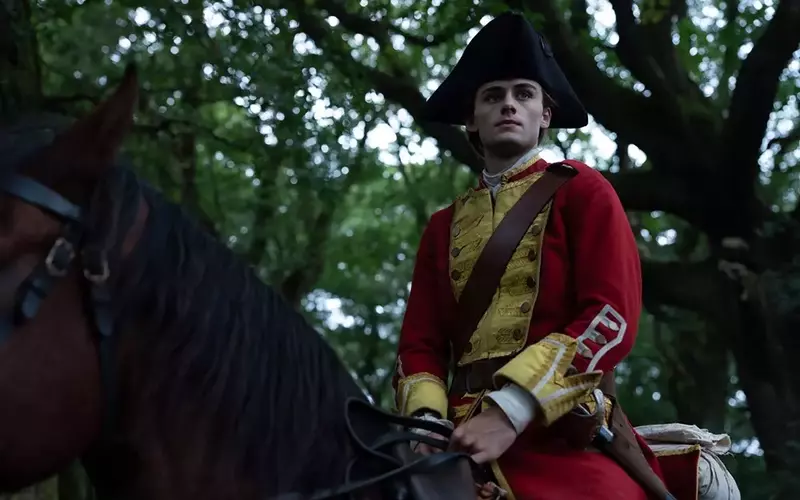
For 'Young Washington,' a film he characterizes as a narrative of the American frontier, Erwin intentionally blended period piece authenticity with cutting-edge AI. He assembled a dedicated team of five AI artists, an AI producer, and additional crew members. Approximately 100 shots within the film benefited from AI augmentation, employing platforms like Luma, Amazon's Project Nara, and Magnific. This integration encompassed various applications, including the creation of AI-generated establishing shots and the realistic depiction of cannon fire from rented physical props. In one notable instance, AI transformed two Wonder Project executives, filmed in casual attire, into period-accurate British soldiers on horseback, addressing a scene missed during principal photography.
While AI played a significant role, Erwin clarified that for tasks such as crowd duplication in wide shots, the production adhered to conventional visual effects methodologies. He noted that having a sufficient number of extras on set allowed for traditional techniques when expanding crowd scenes. Despite some online criticism regarding the film's AI usage and perceived quality (with 'Young Washington' receiving a 63% on Rotten Tomatoes, although a Variety critic deemed it "watchable in a stolid way"), Erwin remains unfazed. He believes some critics may have misattributed traditional VFX to AI, emphasizing that many of the effects are consistent with decades-old industry practices.
Erwin also highlighted the importance of transparency in securing the cast's confidence in AI. Actors such as Ben Kingsley, Andy Serkis, and Mary-Louise Parker were engaged through open communication, fostering an understanding of how these tools were being utilized. Erwin posits that once actors witness the technology firsthand, they generally embrace it, as it can offer them greater agency over their digital performances. At 44, Erwin views AI as the next evolutionary step in filmmaking, drawing parallels to the shift from film to digital cameras. Having navigated his early career by adopting digital technology to overcome limitations, he foresees AI democratizing filmmaking, fostering a new era of creativity and original voices within the industry, despite potential disruptions.