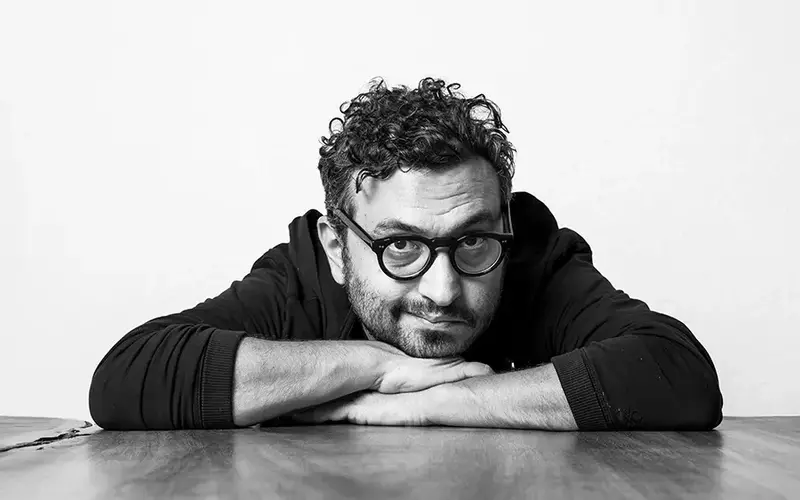

Alonso Ruizpalacios, a celebrated Mexican director, recently captivated attendees at the Bogotá Audiovisual Market (BAM) with a thought-provoking masterclass. During his session, he delved into critical themes such as navigating professional disappointments, the urgent call for creative and subversive storytelling, and the potential pitfalls of artificial intelligence in cinema. His address highlighted the indispensable virtue of resilience within the demanding realm of filmmaking, urging creators to adopt a 'Trojan horse' strategy to subtly inject meaningful narratives into mainstream entertainment. This approach, he argued, is vital for connecting with broader audiences and fostering a renewed appreciation for independent cinema.
Embracing Resilience and Navigating Setbacks in Filmmaking
Alonso Ruizpalacios’s masterclass at the Bogotá Audiovisual Market provided a candid exploration of the challenges inherent in the filmmaking journey. He began by drawing parallels between the disappointment of a sports loss and the frequent setbacks encountered in creative endeavors, reciting Elizabeth Bishop's poem 'One Art' to underscore the importance of accepting loss with grace. Ruizpalacios articulated that mastering the art of losing—whether it's a failed grant application, a project not meeting expectations, or the arduous process of securing funding and distribution, as was the case with his film 'The Kitchen'—is a crucial lesson that builds resilience over time. He stressed that resilience is not merely about enduring failure but about learning from it, adapting, and continuously striving forward, which he believes is a cornerstone of a sustainable career in cinema.
During his session, Ruizpalacios recounted the protracted and often difficult journey of bringing his black-and-white film, 'The Kitchen,' to fruition. He described the arduous process of securing financial backing, which involved numerous false starts and ultimately required significant perseverance. The coordination of an international cast, culminating in an intensive month-long rehearsal period before shooting, further exemplified the logistical complexities and personal commitment demanded by such ambitious projects. He particularly highlighted the additional hurdle of finding U.S. distribution for 'The Kitchen,' given its thematic focus on immigration, which presented unique challenges in a competitive market. Through these anecdotes, Ruizpalacios emphasized that each obstacle, while frustrating at the moment, served as a valuable learning experience, ultimately contributing to his growth as a filmmaker and reinforcing the necessity of an unwavering spirit in the face of adversity.
The Vision for 'Trojan Horse' Cinema and the Perils of AI
In his insightful masterclass, Alonso Ruizpalacios articulated a compelling vision for what he terms 'Trojan horse' cinema, advocating for independent films that skillfully embed subversive ideas and artistic depth within commercially accessible frameworks. He argued that this strategy is crucial for independent filmmakers to compete with dominant commercial productions, particularly given the current landscape dominated by sequels and reboots, which he views as indicative of a creative stagnation in Hollywood. Ruizpalacios emphasized that the goal is not merely to create art-house films for a niche audience, but to craft engaging narratives that can subtly re-educate and broaden the perspectives of mainstream viewers. This approach, inspired by historical examples of European filmmakers who infused artistic integrity into the Hollywood system, calls for innovation in distribution and format, even playfully suggesting the potential of episodic films on platforms like TikTok to reach new demographics.
Ruizpalacios also expressed significant reservations about the increasing influence of artificial intelligence in creative fields, particularly filmmaking. While acknowledging AI's utility as a tool, he voiced concern over the industry's uncritical adoption and "frenzied enthusiasm," warning that such an embrace could undermine the intrinsic value of the creative process. He passionately defended the human element of creation, highlighting the joy and profound experience derived from the meticulous work of writing—the search for the perfect word, the rewriting of sentences, and the immersion in language. For Ruizpalacios, the true essence of human experience lies in this laborious yet rewarding process, rather than in an obsessive pursuit of efficiency or an outcome-driven mentality. He suggested that an over-reliance on AI risks diminishing the very pleasure and depth that define artistic endeavor, urging for a more balanced perspective that values the journey of creation as much as its final product.