
HBO's latest four-part documentary series, 'The Man Will Burn,' endeavors to capture the essence and intricate workings of the iconic Burning Man festival. Boasting extensive access over several years to the event's participants, organizers, and bureaucratic processes, the series presents a visually striking, albeit somewhat superficial, portrayal. Despite its ambitious scope, the production grapples with an inconsistent narrative structure and a tendency to shy away from deeper interrogation, ultimately offering an engaging yet puzzling account that leaves viewers wanting more profound insights into this unique global phenomenon.
The docuseries opens by delving into the pivotal decision surrounding the 2021 festival amidst the ongoing global pandemic. A stark division emerged within the Burning Man leadership and community: should the event be postponed for another year to allow for widespread vaccinations and better COVID mitigation, ensuring a triumphant return in 2022? Or was it imperative to proceed for the sake of the festival's core values, its devoted followers, and its financial stability? This internal conflict, particularly highlighted by the contrasting views of CEO Marian Goodell and board member Kimbal Musk, forms a central point of early tension. Despite Musk's implied sense of entitlement, the ultimate decision to delay the festival for an additional year was made.
This postponement had a direct impact on prospective attendees like Lindsay, a professor from Pasadena, and Ray, a Black veteran residing in rural North Carolina. Both had eagerly anticipated their inaugural Burning Man experience, offering the series a valuable entry point to explore the festival's allure from diverse perspectives. Through their stories, the documentary aims to showcase that the appeal of becoming a 'burner' transcends demographic boundaries. Viewers are introduced to the festival's vibrant mix of culture, art, music, and counter-culture elements, alongside its historical roots in the Bay Area's Cacophony Society and its expansion into the Nevada desert, eventually becoming the global phenomenon known as Black Rock City LLC.
However, a recurring criticism of 'The Man Will Burn' lies in its reluctance to truly scrutinize the inherent complexities and occasional contradictions within the Burning Man organization. While various figures articulate differing visions for the festival's future, the series often frames these disagreements as benign and ultimately serving the greater good of Burning Man. This narrative approach, which suggests a harmonious, shared objective despite underlying tensions, feels less than entirely convincing. The documentary's close collaboration with the Burning Man Project (BMP) appears to lead to a somewhat sanitized portrayal, avoiding tough questions about the influence of Silicon Valley elites and the potential clashes between the festival's idealistic origins and its evolving commercial realities.
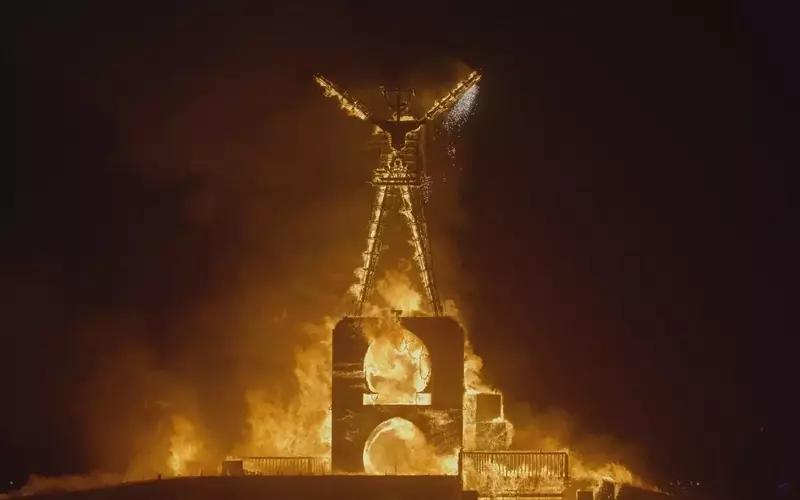
The visual spectacle of Burning Man, with its unique fashion, breathtaking pyrotechnics, 'Mad Max'-esque aesthetic, and colossal art installations set against the vast Nevada desert, is undeniably captivating. The series excels in its drone cinematography, showcasing the sheer scale and artistic ambition of the event, which annually transforms into a temporary city of up to 80,000 inhabitants. Yet, for all its visual prowess, the documentary itself is criticized for lacking artistic ambition and taking few risks, mirroring neither the experimental spirit nor the challenging nature of the event it chronicles. It presents Burning Man as a gathering of brilliant minds, artists, and adventurers, but fails to adopt a similar investigative or interpretive stance.
Veteran 'burners,' including artists, logistical experts, and general enthusiasts, contribute to the narrative, offering a largely positive and, at times, overly idealized view of the festival. The series suggests that modern Burning Man faces its biggest challenges from external perceptions, such as sensationalist media reports and the impact of cell phones and social media influencers, rather than internal conflicts. This perspective is particularly evident in its handling of the rain-soaked 2023 event, where the documentary reassures viewers that everything was 'perfectly fine,' despite initial reports of chaos. The narrative also touches upon the 2021 cancellation, the subsequent 'renegade' event, and the challenges of the 2023 deluge, yet it conspicuously avoids addressing later financial difficulties or more contentious issues, abruptly concluding as if all problems were resolved. This pattern of shying away from thorny subjects and opting for seemingly happy resolutions for individual story arcs ultimately prevents 'The Man Will Burn' from achieving the depth and critical perspective it might have otherwise offered.