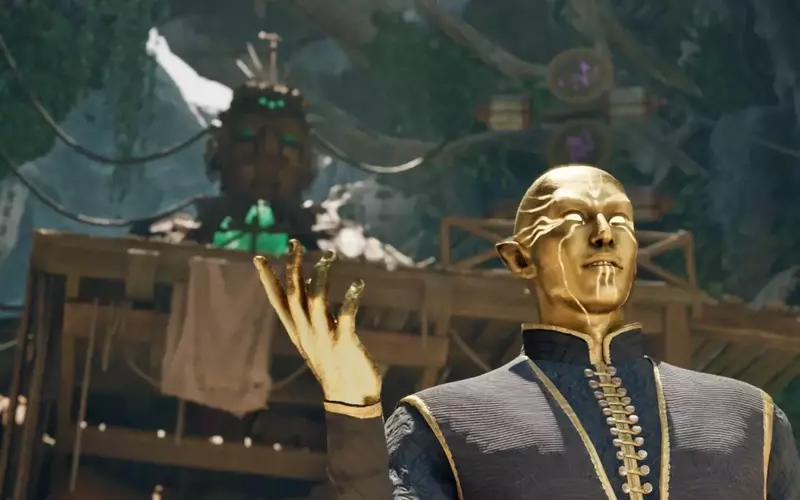

Recent organizational shifts within Xbox have led to a significant realignment of development priorities, particularly impacting studios like Obsidian Entertainment. Following substantial workforce reductions and a sharpened focus on established franchises, Obsidian is reportedly redirecting its efforts toward developing a new installment in the acclaimed Fallout series. This pivot suggests a potential re-evaluation of projects such as a follow-up to the 2025 title, Avowed, and highlights a broader strategic move by Xbox to consolidate its resources around its most prominent intellectual properties.
Xbox's Gaming Strategy Under Scrutiny Amidst Studio Realignments
In a move signaling a major strategic overhaul, Xbox announced in the current week widespread business adjustments, projected to result in the elimination of 3,200 positions by the upcoming summer. This decision has reportedly led to considerable impacts on various studios under the Xbox umbrella, including Id Software, known for its work on Doom. Obsidian Entertainment, a particularly affected entity, reportedly saw a 25% reduction in its workforce as part of the initial layoff wave, coinciding with a significant shift in the studio's operational direction. According to a Bloomberg investigation, the remaining personnel at Obsidian have been reassigned to develop a new Fallout game, as Xbox intensifies its concentration on its flagship intellectual properties. This mandate, it is understood, necessitates the deferment of other ongoing projects, including a potential successor to 2025's Avowed.
As with many developments currently emanating from Xbox, the intricacies surrounding these changes remain somewhat ambiguous. While some accounts suggest an ongoing internal commitment to refine the Avowed project for future reconsideration, the prevailing indicators suggest that a direct continuation is not an immediate priority for Microsoft. This situation is particularly disheartening for those who anticipated a sequel to Avowed, especially given the robust foundation laid by the original game. Even more concerning is the perception that Xbox appears willing to overlook the rich universe established by Avowed at a critical juncture in the gaming landscape.
Although Avowed launched in 2025 as the inaugural title in a new series, its narrative is intricately woven into the fabric of Obsidian's broader Pillars of Eternity universe. This universe, first introduced in 2015 with Pillars of Eternity, is set within the fictional world of Eora. While Eora largely adheres to traditional high-fantasy tropes, it distinguishes itself through pervasive supernatural phenomena and deep-seated religious strife. A particularly compelling aspect of this universe is the absence of authentic deities, replaced instead by artificial constructs engineered by an ancient civilization to impose a sense of moral order. This imaginative premise sets Eora apart from more conventional Dungeons and Dragons-inspired settings.
This innovative concept proved highly successful in the realm of computer role-playing games (CRPGs). Pillars of Eternity garnered widespread critical acclaim upon its 2015 release, heralding what many perceived as a resurgence for the genre, reminiscent of classic PC RPGs like Baldur's Gate. Obsidian capitalized on this momentum with the 2018 release of Pillars of Eternity 2: Deadfire. Despite an initial modest commercial reception, the game eventually cultivated a dedicated following, elevating the series to a cult status.
The Pillars of Eternity series seemingly entered a period of quiescence following Microsoft's acquisition of Obsidian in 2018, during which the studio focused on titles such as The Outer Worlds and Grounded. The universe finally re-emerged in 2025 with Avowed, which presented a new narrative within Eora centered on a deadly plague. While the game's more contained scope generated mixed reactions from players accustomed to expansive open worlds akin to Elder Scrolls, Avowed nonetheless served as an excellent entry point into the previously daunting CRPG universe. It appeared that Pillars of Eternity was on the precipice of a mainstream breakthrough that Xbox could further cultivate. However, this trajectory now seems uncertain, given Obsidian's reported shift to a new Fallout game.
There was a period when such a strategic redirection would have been considered logical, if not inevitable. CRPGs have traditionally occupied a niche market, primarily appealing to PC enthusiasts rather than the broader audience of Xbox Series X owners. From a purely business perspective, it appears more commercially viable to entrust a highly popular intellectual property like Fallout to the very team credited with creating one of the most revered entries in the series, New Vegas.
However, Xbox's timing in this decision appears to be significantly misjudged. The success of Baldur's Gate 3 in 2023, developed by Larian Studios, unequivocally demonstrated a substantial and untapped demand for CRPGs. This critically acclaimed title enabled a wider audience to experience the profound satisfaction of intricately designed, choice-driven adventures set within richly imagined fantasy worlds. Few games have successfully leveraged this momentum in the intervening years, primarily due to the considerable resources required for such endeavors. Even Hasbro, the rights holder for the IP through Wizards of the Coast, is reportedly encountering difficulties in identifying a studio capable and willing to undertake the development of Baldur's Gate 4.
The creation of an immersive universe capable of supporting a sprawling RPG is not an overnight endeavor. It demands a highly skilled team possessing the ability to construct such a world and develop a reactive gameplay experience where player choices genuinely influence the surrounding environment. Obsidian stands out as one of the rare studios equipped with all the necessary elements to achieve this—a profound aptitude for world-building, a keen enthusiasm for robust RPG systems, and a mastery of narrative design guided by player decisions. This specific confluence of talents is precisely what is required to produce a title that could rival the impact of "the next Baldur's Gate 3." Instead, the studio finds itself engaged in Fallout development, navigating the aftermath of a seemingly ill-considered wave of layoffs.
This decision is but one of many indicators suggesting that Microsoft may not fully grasp the intrinsic value of its gaming portfolio. The Pillars of Eternity universe represents the kind of intellectual property that any publisher would eagerly pursue at this moment. Whether harnessed to power an enhanced Avowed 2 or to cater to an underserved market with a dedicated CRPG, Xbox possesses a potentially lucrative asset. To realize this potential, however, requires an understanding of the broader gaming landscape beyond the confines of the Xbox ecosystem and an intuitive sense of prevailing trends. Xbox's recent drastic reorganization casts doubt on whether its leadership possesses the necessary foresight to steer the brand effectively into an evolving future. A new Fallout game, likely to debut years after the series' prominent moment on Prime Video, is unlikely to be the sole solution for Xbox's challenges. What truly holds promise, however, are talented developers who genuinely understand player desires, provided they are afforded the trust and resources to unleash their creative potential.