This week's economic review highlights several critical areas shaping the financial landscape. Key developments include the Trump administration's legal challenge to broaden tariff refund eligibility, former White House communications director Anthony Scaramucci's stark warnings about the growing housing affordability crisis, and a macroeconomic strategist's analysis of the Federal Reserve's precarious policy position amidst reaccelerating inflation. Additionally, a leading economist has expressed serious concerns about the overall health of the U.S. economy, while a prominent banking CEO has drawn parallels between current market enthusiasm and conditions preceding historical downturns. These topics collectively paint a picture of an economy grappling with significant challenges and uncertainties.
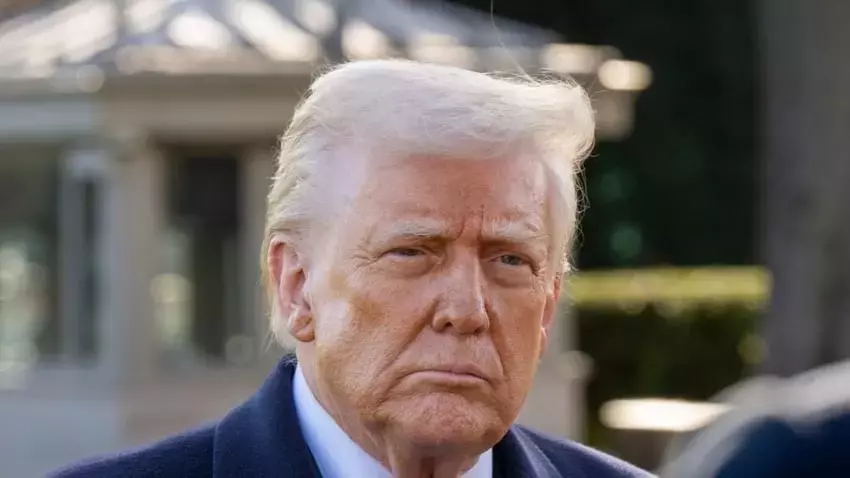
The Trump administration has initiated an appeal against a federal court's decision to extend tariff refunds to all U.S. importers, not solely those who filed lawsuits. This action, spearheaded by the Department of Justice, could potentially disrupt the ongoing process of repaying invalidated duties. The original court order aimed to benefit a broader range of companies by allowing them to claim refunds for tariffs previously deemed unlawful. The administration's appeal signals a determined effort to contest this expansion, introducing further uncertainty into trade policy and its financial implications for businesses.
Anthony Scaramucci, a former White House communications director, has voiced strong concerns regarding the escalating housing crisis in the U.S. He attributes this to persistent inflation and rising costs, which he argues have rendered median-priced homes unattainable for a significant portion of American households. Scaramucci noted that the average home price currently stands at approximately $432,000, necessitating an annual household income of around $160,000 to manage mortgage payments comfortably while retaining financial flexibility. This situation suggests that many families are making difficult trade-offs, sometimes even sacrificing essential services like healthcare, to afford housing.
Macro strategist Alfonso Peccatiello, founder of The Macro Compass, has articulated a challenging outlook for the Federal Reserve's monetary policy. He believes that U.S. inflation is experiencing a quiet reacceleration, placing the Fed in a difficult position. Peccatiello contends that the Federal Reserve may lack the political will to implement further interest rate hikes, despite inflationary pressures. Market indications, as tracked by the CME FedWatch tool, suggest a nearly 70% probability of a 25-basis-point rate increase by the end of the year, underscoring the market's anticipation of continued tightening despite potential political resistance.
Mark Zandi, the Chief Economist at Moody’s Analytics, has issued a sobering assessment of the U.S. economy, characterizing it as "struggling" rather than merely soft. He specifically highlighted weaker growth indicators, a strained housing market, and reduced capital spending as red flags. Furthermore, Zandi warned that potential disruptions stemming from the US-Israel conflict, particularly involving Iran, could substantially elevate the risk of a recession. His analysis underscores the fragility of the current economic environment and the potential for geopolitical events to exacerbate existing vulnerabilities.
Jamie Dimon, CEO of JPMorgan Chase & Co., has expressed apprehension regarding the current enthusiastic sentiment in financial markets. He observed a "gung ho" attitude among Wall Street clients, interpreting this high level of optimism as a cause for concern. Dimon suggested that such market exuberance bears a resemblance to periods preceding significant financial crashes in the past, implying that current market confidence may be detached from underlying economic realities and could be indicative of an impending correction. His remarks serve as a cautionary note to investors and policymakers alike.
This week's economic discussions have illuminated a complex and potentially volatile financial landscape. From the Trump administration's legal maneuvering over tariff refunds to Scaramucci's warnings about housing affordability, the Federal Reserve's policy tightrope walk, and Zandi's candid assessment of the U.S. economy, a clear theme of uncertainty emerges. Jamie Dimon's comparison of current market sentiment to historical pre-crash conditions further reinforces the need for vigilance. These interconnected issues suggest that the coming months could bring significant challenges, requiring careful attention from both policymakers and market participants.