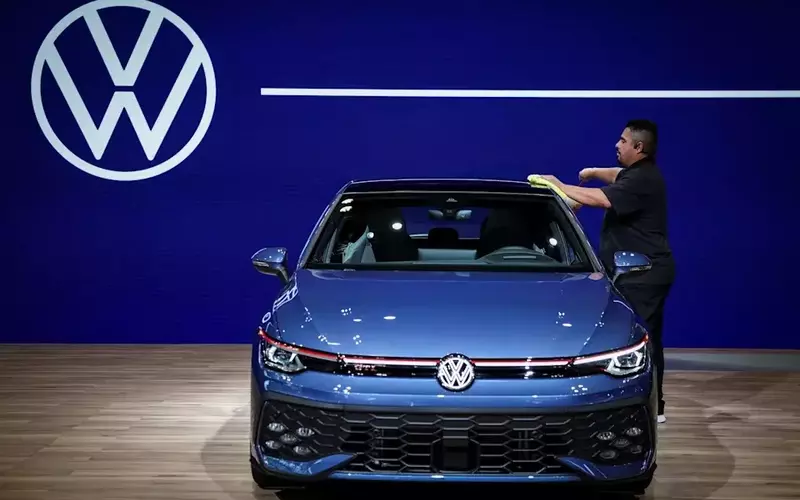

Facing a challenging global automotive landscape, the Volkswagen Group is undertaking a major strategic overhaul, planning to reduce its product line by 50%. This decisive action is a direct response to a significant downturn in its market position in China, a surge in operational expenses, and a deceleration in electric vehicle (EV) sales. The company aims to enhance efficiency and competitiveness by concentrating on its most popular market segments.
Volkswagen's Strategic Overhaul Amidst Global Market Shifts
In the second quarter of 2026, the venerable German automotive giant, Volkswagen Group, which includes brands like Audi, Skoda, Bentley, and Lamborghini, experienced a notable 8.6% drop in global vehicle deliveries, totaling 2.08 million units. A particularly sharp decline was observed in the Chinese market, where deliveries plummeted by 36.6% to 424,300 vehicles, attributed to market contraction and intense local competition. The Asia-Pacific region also saw a 7.2% reduction. The Volkswagen Passenger Cars brand bore the brunt of this decline, with a 14% decrease in global volume during this period.
Despite previous expectations, electric vehicle sales also faced significant headwinds. Global all-electric deliveries fell by 4.2% to 238,400 units in the quarter. The most pronounced setback occurred in the United States, where EV deliveries saw a staggering 49% decrease to just 5,800 units, largely due to the expiration of federal subsidies and the implementation of new tariffs. The situation in China was equally challenging for EVs, with a 35.6% drop in deliveries, primarily due to the strong emergence of local competitors better tailored to Chinese consumer preferences and benefiting from government incentives.
In response to these pressures, CEO Oliver Blume, under increasing scrutiny, unveiled a comprehensive 'Future Plan.' This initiative encompasses 12 strategic actions designed to achieve a '2030 target picture.' A core component of this plan is the gradual streamlining of Volkswagen's model lineup by up to 50%, with a focus on the most attractive market segments. Furthermore, product complexity, including trim levels and optional packages, will be dramatically reduced by up to 75%.
Blume emphasized the necessity of these measures, stating, "We can only achieve this by substantially reducing complexity – in our product portfolio and technology platforms, in the number of units and decision-making levels." This simplification is expected to improve efficiency and resource allocation across the company.
For Volkswagen enthusiasts in the U.S., this strategic consolidation could mean the discontinuation of niche, low-volume models such as the sporty Golf R hatchback, the Jetta GLI sedan, and the Audi e-tron GT EV. Production capacity is also being scaled back globally, with an anticipated reduction from 10 million to 9 million vehicles annually, a significant drop from the pre-pandemic capacity of 12 million units. Although initial proposals to close four German plants and eliminate 100,000 jobs were blocked by labor representatives on the company's board, the need for cost-cutting remains paramount.
Further financial bolstering could come from the potential divestiture of some luxury brands. Lamborghini and Italian motorcycle manufacturer Ducati are frequently cited as potential spin-off candidates, following the successful initial public offering of Porsche. However, even Porsche has faced its own challenges recently, with its shares declining in the past year due to similar market pressures.
Despite the broader challenges, there were some positive developments. South America saw a 9.4% growth in sales, Western Europe experienced a 1.8% increase, and Central and Eastern Europe recorded a 6.7% rise in the last quarter. Europe's all-electric vehicle order book surged by over 50% compared to the end of 2025, buoyed by new entry-level models like the VW ID. Polo, Škoda Epiq, and CUPRA Raval, which together accumulated more than 54,000 orders.
The Volkswagen Group's proactive restructuring reflects a company grappling with intense competition and evolving consumer demands. The 'Future Plan' aims to consolidate its strengths, reduce operational burdens, and adapt to a new era of automotive manufacturing, particularly in the rapidly changing EV sector.