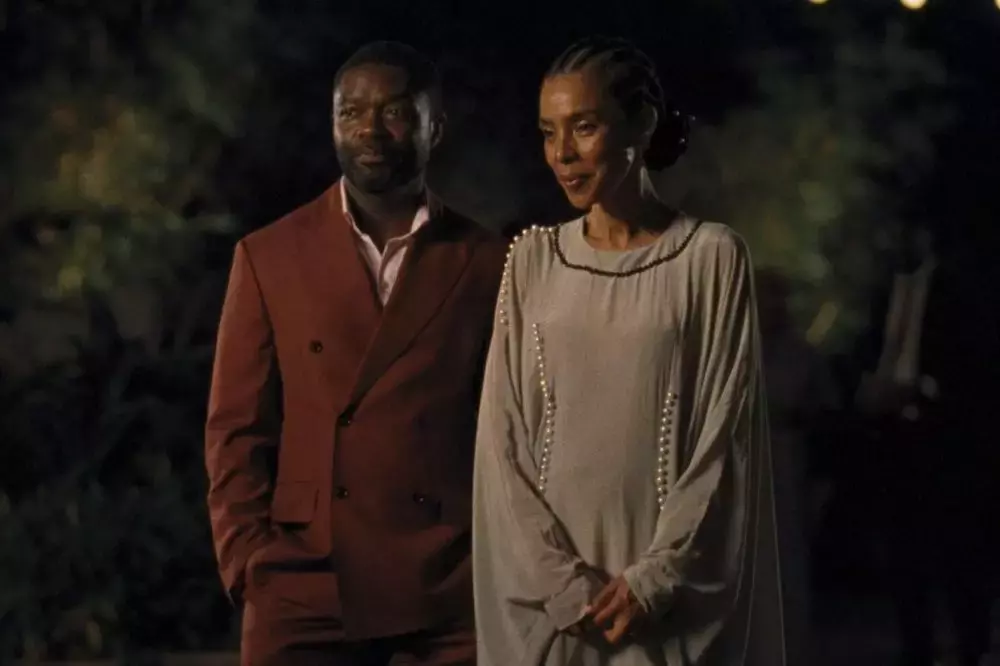
Arie and Chuko Esiri's film "Clarissa" is a brilliant adaptation of Virginia Woolf's classic "Mrs. Dalloway," skillfully relocating the narrative from London to Lagos. This reimagining features an outstanding performance by Sophie Okonedo, whose portrayal of Clarissa infuses the character with a profound sense of melancholic radiance. The film delves into the intricate social circles surrounding this devoted yet emotionally unfulfilled societal figure, presenting a compassionate exploration of her inner life. Surrounded by admiration and conflicting emotions from others, Clarissa remains profoundly isolated, navigating her roles with an outward efficiency that conceals a complex inner world, much like Woolf's original character.
Clarissa's day, filled with preparations for an elaborate evening party at her elegant Lagos residence, appears bustling and well-organized from an external perspective. She directs her household staff, encourages her daughter's participation, and attends to her husband, Richard, all while overseeing the intricate details of event planning. Despite the constant activity and minor frustrations, Clarissa maintains a composed demeanor, though subtle hints of sadness occasionally flicker across her face. This duality is central to the film, showcasing Okonedo’s remarkable ability to convey Clarissa's presence in the moment while simultaneously being lost in her memories and internal reflections.
Her mind frequently drifts back to a summer of her youth, a serene period marked by lake-swimming and outdoor meals, during which she experienced a profound sense of love. This love encompassed not only her relationship with her then-boyfriend, Peter (portrayed by Toheeb Jimoh in his youth and David Oyelowo in adulthood), but also a burgeoning self-awareness and optimism for the future. The younger Clarissa (played by India Amarteifio, whose resemblance to Okonedo is striking) shared these idyllic days with a close circle of friends, including Peter, Sally (depicted by Ayo Edebiri and later Nikki Amuka-Bird), and the jovial Ugo (Kehinde Cardoso and Danny Sapani). This period also saw the introduction of the earnest Richard (Jable Osai), whose contrasting demeanor to Peter ultimately leads to his marriage to Clarissa.
The film seamlessly transitions between these past recollections in the countryside and Clarissa's present-day life in the city. Peter's unexpected return from a long absence in Nigeria disrupts Clarissa's meticulous preparations, prompting a reunion that underscores the passage of time and its effects on their shared history. The casting of younger actors who authentically embody the essence of their older counterparts, despite varying physical resemblances, ensures a smooth narrative flow through the film's intricate use of flashbacks and forwards, maintaining clarity and emotional continuity for the audience.
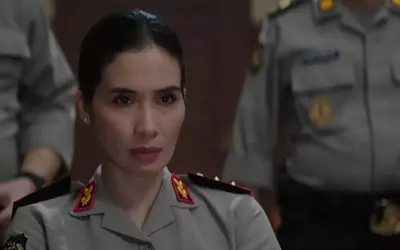
A distinct, though less integrated, subplot introduces Septimus (Fortune Nwafor), a soldier grappling with trauma from his service in a corrupt military unit. His connection to Clarissa is indirect, through his wife Aisha (Modesinuola Ogundiwin), who works as Clarissa's seamstress. While this storyline offers a commentary on Lagosian social disparities and expands the visual scope for cinematographer Jonathan Bloom's stunning 35mm work, it feels somewhat separate from Clarissa's main narrative. Yet, it adds a rich texture to the film, contrasting Clarissa's opulent surroundings with the grittier realities of central Lagos.
Ultimately, the film's strength lies in Okonedo's nuanced performance, particularly in the quiet, reflective moments where Clarissa gazes contemplatively or composes herself before facing the world. As the party unfolds, guests from her past mingle with Lagos's high society, including the formidable Lady Maryam (Joke Silva), whose approval Richard, despite his standing, seems to seek. Clarissa's role as the perfect hostess brings its own rewards, creating an atmosphere ripe with memories and unfulfilled desires. The reunion with her old friends allows for a subtle reconciliation, not necessarily of regrets, but of acceptance. The film concludes not with a definitive resolution, but with a poignant sense of self-acceptance and a recognition that different life choices might have led to different, yet equally complex, dissatisfactions. It celebrates the bittersweet privilege of reflecting on a past where all possibilities seemed open, and on a present where one has found a form of peace.