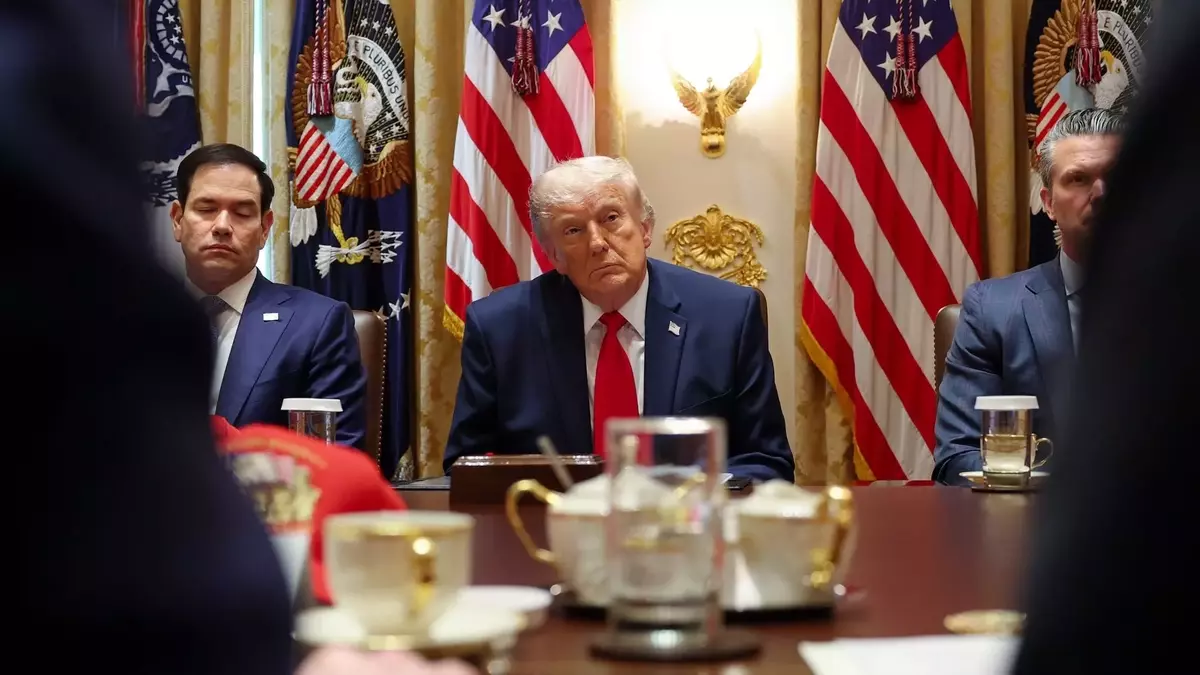
Donald Trump has voiced his strong disapproval of the 'Freedom 250' concert series, which has seen a significant number of musical acts pull out, prompting his call for its complete cancellation. He proposed substituting the event with a 'Make America Great Again' rally, highlighting his belief that such an assembly would draw a larger and more enthusiastic crowd than the scheduled performances. This development also ties into his broader critique of recent judicial decisions affecting his public profile.
Trump's comments emerged after multiple artists withdrew from the 'Freedom 250' concert series, an event he had already labeled as uninspiring. He suggested that instead of featuring musicians he deemed 'third-rate' and 'boring,' a rally would better serve the public's interest and his political agenda. Concurrently, he expressed frustration over a federal judge's directive to remove his name from the Kennedy Center, arguing that the ruling was politically motivated and hindered his efforts to improve the institution.
The "Freedom 250" Concert Controversy and Trump's Response
The "Freedom 250" concert series, intended to run from June 25 to July 10 in Washington D.C., has faced considerable backlash and numerous artist withdrawals. This wave of departures led former President Donald Trump to publicly advocate for the event's cancellation. Initially, he had already disparaged the concert, labeling it as "boring" and its performers as "third-rate artists." His stance escalated, culminating in a direct call to "cancel it," suggesting a more impactful alternative would be a large-scale "Make America Great Again" rally.
Trump's critique of the concert series was not limited to the performers; he also connected it to a recent judicial ruling by U.S. District Judge Christopher Cooper. This ruling mandated the removal of Trump's name from the Kennedy Center building, a decision that Trump vehemently opposed. He argued that the judge was "highly conflicted" and "crooked," implying that the ruling was unjust and prevented him from enhancing the Kennedy Center's standing. He envisioned transforming the center into something "far greater than it ever was before," ideally through a bipartisan effort. The ongoing exodus of artists, including Bret Michaels, The Commodores, Young MC, Morris Day, and Martina McBride, further fueled Trump's assertion that the concert series was doomed to fail, reinforcing his belief that a political rally would be a superior use of resources and public attention.
Artist Withdrawals and the Future of the Event
The "Freedom 250" concert series has been significantly undermined by a continuous stream of artist withdrawals, leading to widespread uncertainty about its viability. Prominent musicians such as Bret Michaels and The Commodores have publicly announced their departure, with Michaels citing a shift in the event's initial celebratory nature towards a more divisive political agenda. This trend of artists stepping away from the concert has become a major point of contention and discussion, highlighting the challenges faced by event organizers in maintaining their lineup.
Beyond Michaels and The Commodores, other notable artists like Young MC, Morris Day, and Martina McBride have also exited the roster. Even Milli Vanilli, initially listed as a participant, had a member express shock at their inclusion, indicating a lack of clear communication or consent. While Vanilla Ice and Flo Rida are reportedly still scheduled to perform, the mass exodus has cast a shadow over the event's artistic integrity and public appeal. This situation underscores the difficulties in organizing large-scale public events that become entangled in political discourse, as artists often seek to distance themselves from controversies that could damage their public image or alienate their fan base. The future of the "Freedom 250" concert series remains precarious given these widespread withdrawals and the critical commentary from figures like Donald Trump.