President Donald Trump recently concluded a high-stakes meeting in the White House Situation Room without publicly disclosing a final verdict on a proposed accord aimed at prolonging a delicate ceasefire with Iran. This comes as his administration maintains a firm stance, insisting that no funds will be released to Iran until a series of critical demands are met. The complex geopolitical dance involves not only the potential for extended peace but also significant economic pressures being applied to Tehran, as revealed by top U.S. financial officials.
Details of the Evolving Diplomatic Standoff
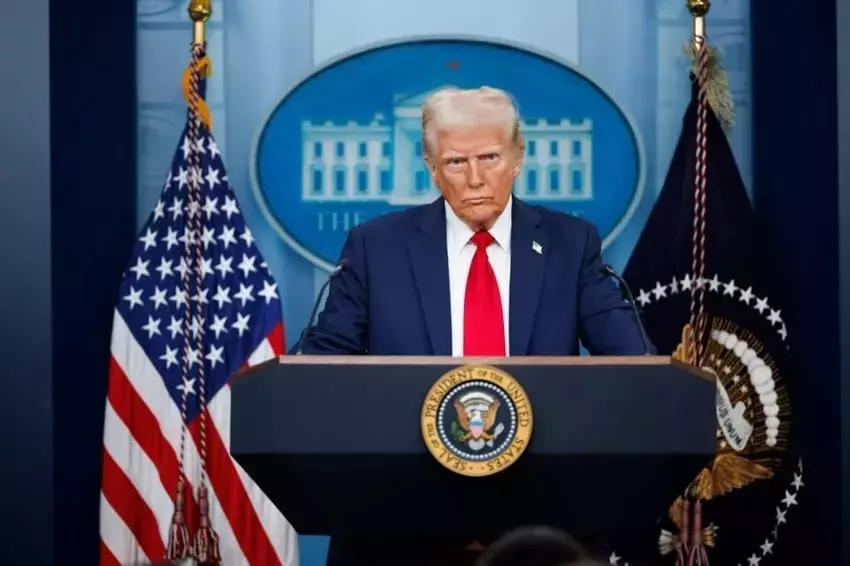
On a significant Friday, President Donald Trump exited a critical White House Situation Room assembly, leaving observers without an immediate declaration regarding a prospective agreement designed to extend a fragile ceasefire with Iran. This pivotal moment underscores the intricate nature of international diplomacy and the high stakes involved in U.S.-Iran relations.
Reports from CNBC, citing an administration insider, brought this development to light. The White House remained silent when approached for commentary, adding to the intrigue. Earlier that day, President Trump had communicated via Truth Social his intent to reach a “final determination” post-meeting. He meticulously outlined conditions Iran must satisfy before any accord could advance. These included permanently preventing Iran from acquiring nuclear weapons, guaranteeing unimpeded maritime traffic through the Strait of Hormuz, and ensuring that Iran's enriched nuclear materials are removed and destroyed under rigorous international supervision.
“No financial resources will be transferred until further notice,” Trump emphatically stated, though he noted progress on several less critical issues. Despite the intense deliberation during the high-profile gathering, a definitive decision was notably absent from the post-meeting announcements.
The clarity surrounding the preliminary agreement further diminished as Iranian state-affiliated media challenged several of Trump’s assertions. Iranian sources reportedly underscored that the liberation of approximately $12 billion in frozen assets remains an indispensable element for any future agreement. The provisional framework under consideration reportedly sought to extend the existing ceasefire, mitigate maritime threats in strategic regional waters, and establish a foundation for broader discussions concerning nuclear activities, the easing of sanctions, and the release of frozen assets.
In the financial markets, oil prices experienced a dip, falling 1.28% to $87.76 per barrel, while natural gas saw a slight decrease of 0.37% to $3.273 by late Friday, reflecting market reactions to the uncertain geopolitical landscape.
Concurrently, Treasury Secretary Scott Bessent on the same Friday articulated that Washington's concerted pressure campaign has significantly debilitated Iran's economic infrastructure. During an interview with FOX Business, Bessent disclosed, “We have confiscated approximately a billion dollars of their cryptocurrency.” He further characterized the broader strategy, known as “Operation Economic Fury,” as one that is pushing Tehran towards an impending financial crisis. He concluded that Iran is currently “at the end of their financial tether,” citing rampant inflation, severe funding shortages, and escalating economic strain within the nation.
This complex situation highlights the delicate balance between diplomatic negotiations and economic leverage in international affairs, with both sides maneuvering to secure their strategic objectives amidst ongoing tensions.
The unfolding events between the United States and Iran underscore the intricate balance of power and diplomacy on the global stage. From a journalistic perspective, the lack of immediate resolution after such a crucial meeting suggests deeply entrenched disagreements and possibly internal divisions within both administrations regarding the optimal path forward. The public declaration by President Trump of stringent preconditions, coupled with Iran's counter-claims regarding frozen assets, illustrates a classic diplomatic standoff where each side attempts to maximize leverage. The economic component, particularly the U.S. Treasury's aggressive stance on seizing Iranian crypto assets and the broader 'Operation Economic Fury,' highlights a strategy of coercive diplomacy. This approach aims to compel compliance through financial pressure, making the economic situation a critical factor in any potential breakthrough or continued impasse. As a reader, one might feel a sense of apprehension regarding the stability of the region, especially given the market reactions in oil and natural gas prices. The long-term implications of these negotiations, or their failure, could significantly impact global energy markets and international security, emphasizing the need for transparent and effective communication from all parties involved.