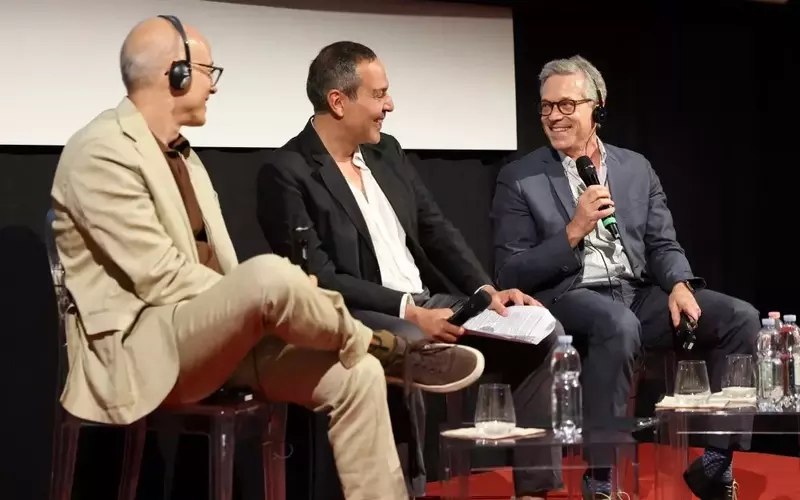

The global television landscape is undergoing a significant transformation, a topic thoroughly debated at this year's Italian Global Series. Industry leaders David W. Zucker from Scott Free and Steve Stark from Toluca Pictures offered their insights into the revolutionary impact of streaming platforms and the growing influence of technology and corporate consolidation on content creation and distribution.
Zucker, whose producing credits include acclaimed series such as “The Good Wife” and “The Man in the High Castle,” highlighted both the benefits and drawbacks of this new paradigm. He noted that the advent of services like Netflix fundamentally altered how television content is produced and consumed. Historically, television aimed to build enduring relationships between viewers and characters, encouraging sustained engagement. However, the streaming model, driven by subscription renewals and shorter attention spans, prioritizes a constant influx of new material rather than fostering long-term viewer loyalty. This shift, according to Zucker, affects both the viewing experience and the fundamental nature of the content itself. He also critiqued the ironic return of streaming services to advertising and distribution models, effectively resurrecting aspects of the traditional television industry but now at a cost to the consumer, reflecting a concerning trend where financial interests overshadow artistic integrity.
Echoing these sentiments, Zucker drew a stark comparison, stating, "Since we're in Italy: this is the fall of Rome, and it's hard not to feel that." He lamented the rapid consolidation within the media industry, pointing to major studio mergers as an ominous sign for the future of traditional filmmaking. Stark further emphasized the loss of intuitive, gut-driven decision-making in favor of data-centric approaches, which, while useful, can stifle innovation and originality. Despite these challenges, Zucker acknowledged the positive impact of streaming on global content accessibility, praising the increased opportunities for international stories to reach diverse audiences, fostering a broader cultural dialogue. However, he cautioned against the cynical aspect of exploiting international markets for cheaper production, emphasizing the need to balance commercial interests with genuine artistic exchange.
The ongoing evolution of the television industry, marked by technological shifts, market forces, and changing consumer habits, presents both formidable challenges and exciting opportunities. It compels us to consider how we can uphold artistic vision and diverse storytelling in an increasingly commercialized landscape, ensuring that innovation continues to serve creativity and global understanding.