
In the evolving landscape of electric vehicles, the concern over range has been a common apprehension. While official EPA figures offer a baseline, real-world driving conditions often paint a different picture. To address this, dedicated automotive experts have devised a stringent 75-mph highway range test, providing a more accurate measure of an EV's endurance during typical long-distance journeys. This comprehensive evaluation reveals which battery-powered models truly stand out for their ability to cover significant mileage on a single charge.
Details on Leading Electric Vehicle Ranges
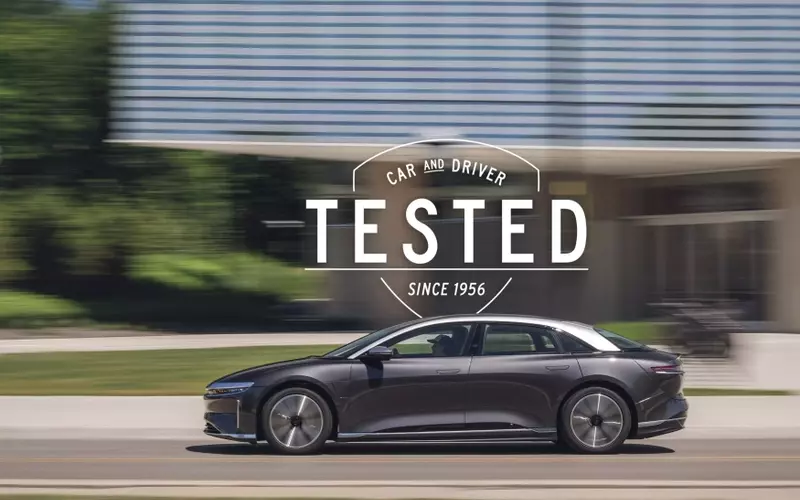
At the forefront of electric vehicle range, the Lucid Air has consistently demonstrated exceptional performance. The 2022 Air Grand Touring, a remarkable 819-hp model, achieved an impressive 410 miles in tests. Even its more accessible Pure trim, despite a power reduction, managed a substantial 310 miles. Although the 2024 rear-wheel-drive Air Pure, with a 92.0-kWh battery, recorded 300 miles, it underscores Lucid's commitment to extended range.
Following closely, the Chevrolet Silverado EV, a 2024 model, redefined expectations for electric pickups by delivering 400 miles. Sharing its robust 205.0-kWh battery with the GMC Hummer EV pickup, this less bulky truck not only goes the distance but also boasts rapid charging capabilities, averaging 198 kW, though a full charge from 10% to 90% takes around 58 minutes.
The Mercedes EQS-Class showcases its endurance with both the EQS450 and EQS450+ variants reaching 400 miles on a single charge in 2022 tests. Even the dual-motor all-wheel-drive EQS580 4Matic provided a commendable 350 miles, while the AMG-badged EQS achieved 290 miles, highlighting the luxury brand's range versatility.
For those seeking a large electric SUV, the Cadillac Escalade IQ, a 2025 model, impressed with a 380-mile range. Powered by a hefty 205-kWh battery, this vehicle, despite its considerable weight, also exhibited surprising acceleration, reaching 60 mph in just 4.5 seconds.
The Porsche Taycan's base rear-wheel-drive model, though priced above $100,000, proved to be its longest-range variant, achieving 360 miles. This demonstrates that performance doesn't necessarily come at the cost of range in Porsche's electric lineup.
Mercedes-Benz also offers a compact electric option with the CLA-Class Electric. The rear-wheel-drive CLA250+ Electric achieved an excellent 340 miles, making it an attractive choice for those seeking a balance of range and affordability, starting under $50,000.
The SUV sibling, the Mercedes EQS-Class SUV, while sharing design cues with its sedan counterpart, delivered 340 miles in the 2024 EQS450+ SUV. This positions it as a strong contender in the electric SUV segment, particularly for models offering a third row of seating.
Porsche's foray into electric SUVs, the Macan Electric, managed a respectable 320 miles. Although it trails the Taycan in raw range, it offers a compelling blend of Porsche's prestige and practical electric mobility.
Rivian's multi-variant R1S SUV also hit 320 miles with its Dual Motor configuration and the larger Max battery pack, proving that versatility can coexist with robust range performance.
The Tesla Model S, specifically the Long Range Plus variant from the early 2020s, achieved 320 miles. While it fell short of EPA estimates, its real-world performance remains noteworthy.
BMW's executive electric sedan, the i7, provided 310 miles in its xDrive60 guise. Though slightly less than some rivals, it offers sufficient range for most discerning buyers.
Lucid's SUV, the Gravity, with its 123-kWh Grand Touring pack, also reached 310 miles, establishing its place as a long-range option in the electric SUV market.
The Tesla Model 3 Long Range, now known as the Premium trim, recorded 310 miles, solidifying its reputation as a highly efficient compact electric sedan.
Hyundai's sleek Ioniq 6, in its SE Long Range trim with a 77.4-kWh battery, achieved 300 miles. This model offers an appealing blend of style and range, though the all-wheel-drive version has a reduced range.
The Tesla Model X, even after its discontinuation, demonstrated its long-range capability with 300 miles, underscoring its historical significance in the EV market.
BMW's iX, a mid-size electric SUV, delivered 290 miles in its xDrive45 form. Despite its distinctive exterior, the iX offers a premium interior and solid range, though its production is slated to end after the 2026 model year.
The now-defunct Fisker Ocean One, an all-wheel-drive model, managed an impressive 290 miles, serving as a testament to its once-promising range capabilities.
Finally, the robust GMC Hummer EV Pickup and the GMC Sierra EV both recorded 290 miles. These large electric trucks, despite their energy demands, achieve substantial range thanks to their massive battery packs, reflecting a powerful blend of utility and electric performance.
This comprehensive evaluation provides valuable data for consumers navigating the expanding electric vehicle market. The dedication to real-world testing at consistent highway speeds offers a practical benchmark, moving beyond theoretical figures to deliver actionable insights. As electric vehicle technology continues to advance, the emphasis on practical range becomes increasingly critical for widespread adoption and consumer confidence. These findings confirm that a growing number of EVs are more than capable of handling long-distance travel, effectively mitigating past concerns about range limitations. This shift not only benefits individual drivers but also contributes to the broader environmental goals of reducing reliance on fossil fuels and promoting sustainable transportation solutions.