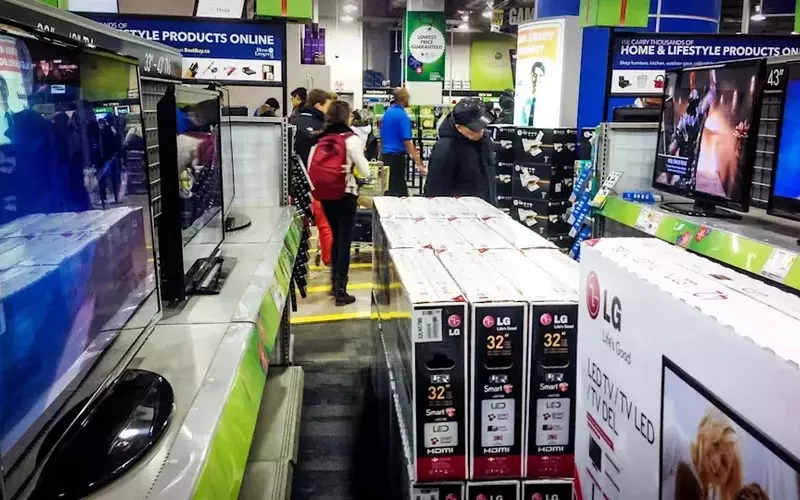

In a landscape marked by escalating production costs, Apple and Best Buy are signaling an imminent wave of price adjustments for consumer electronics. This development stems from a critical worldwide scarcity of memory components, which are indispensable for nearly all modern computing devices. Despite these forewarnings, consumer purchasing trends reveal a notable hesitation, suggesting a broader climate of economic uncertainty and a shift towards more conservative spending habits.
Tech Industry Leaders Foresee Price Surges Amid Chip Deficit
In June, Apple's CEO, Tim Cook, articulated concerns regarding the unavoidable nature of forthcoming price hikes. Speaking to The Wall Street Journal, Cook highlighted the company's efforts to mitigate the substantial cost increases being passed down from suppliers, attributing the crisis to an unprecedented global shortage of memory chips—specifically DRAM and NAND components. These critical parts are integrated into virtually every electronic device available today. Cook starkly characterized the situation as a "hundred-year flood," indicating the severity and widespread impact of this issue on the industry. This shortage is expected to translate into higher consumer prices across the board, affecting not just Apple products but a vast array of electronic goods.
Best Buy's outgoing CEO, Corie Barry, provided further insights into consumer behavior during the company's first-quarter earnings call. Contrary to traditional responses where impending price increases often spur preemptive purchases, Barry noted a distinct lack of such behavior among consumers. Her research indicates that customers are not accelerating their buying cycles to beat the price changes. This observation points to a cautious consumer base, resilient yet pressured, meticulously seeking out deals and sales to stay within budgetary constraints. Despite the potential for increased prices on memory-dependent products, manufacturers currently seem reluctant to fully pass on these costs, attempting to absorb some of the burden.
This reluctance to make advance purchases, even with clear signals of rising costs, aligns with broader economic trends. A report by McKinsey & Company's ConsumerWise team for the second quarter of 2026 underscored a decline in consumer optimism. Factors such as inconsistent employment growth, persistent inflation, and ongoing geopolitical instability have led to a more pessimistic economic outlook among American consumers. Consequently, there's a noted intention to scale back spending across most discretionary categories. While Best Buy's CEO observed a willingness among consumers to invest in high-value items when truly necessary or technologically compelling, the overall trend reflects a significant cutback in spending intent for non-essential goods, including accessories, jewelry, home décor, and even sports equipment. This conservative approach is further supported by Bank of America's April Consumer Checkpoint, which, despite showing an overall increase in credit and debit card spending, indicated a slowdown in discretionary spending towards the end of the month.