
As the United States commemorated its 250th anniversary of independence, two prominent figures, vastly different in their public personas, dominated the national conversation with their own distinct spectacles. Taylor Swift’s wedding to Travis Kelce, a private affair that nonetheless captured widespread attention, unfolded as former President Donald Trump held a public rally on the National Mall. This juxtaposition highlighted a curious parallel: both events, despite their divergent intentions and audiences, emphasized the power of individual personalities over collective principles, echoing a historical shift from the quiet, strategic warnings of figures like Paul Revere to the amplified, immediate narratives of modern celebrity culture.
The Quiet Celebration and the Grandstanding Rally
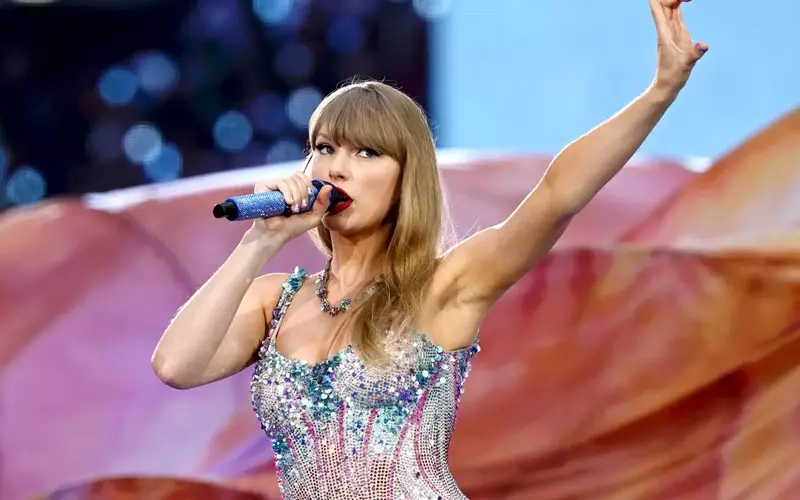
The Fourth of July weekend witnessed a fascinating dichotomy in American public life, characterized by the private nuptials of global music icon Taylor Swift and the conspicuous public address of former President Donald Trump. While Swift’s wedding to Travis Kelce was a largely clandestine event, held behind closed doors and carefully guarded from public intrusion, it nonetheless generated significant buzz and captured the imagination of her vast fanbase. This intimate gathering, reportedly attended by a constellation of pop stars, media personalities, and Hollywood elite, symbolically coincided with the nation's 250th anniversary, drawing a subtle yet undeniable connection between the celebration of personal union and national heritage. Despite its private nature, the sheer scale of Swift's cultural influence meant her personal milestone became a de facto public event, with fans and media outlets eagerly seeking any glimpse or detail, cementing its place in the holiday's narrative.
Conversely, Donald Trump seized the Independence Day weekend as a platform for a highly visible political rally on the National Mall. In stark contrast to Swift's understated approach, Trump's event was a loud and assertive display, aiming to project strength and command national attention. His speech, infused with familiar rhetoric, sought to reframe American history through a lens that invariably elevated his own image and agenda. He invoked historical figures and national achievements, only to pivot back to his personal grievances and political slogans, such as 'Trump Is Your President.' This public spectacle was a clear attempt to assert dominance and rally his base, underscoring a consistent theme in his public appearances: the centrality of his own persona. The former president's efforts, including appropriating elements of Swift's 'Eras Tour' branding for his social media, illustrated a desire to compete for cultural relevance even amidst a deeply personal celebrity event, further highlighting the pervasive influence of individual figures in contemporary American society.
Personality Over Principle: A Modern American Paradox
The contrasting celebrations of Taylor Swift's wedding and Donald Trump's rally served as a potent illustration of how modern American society increasingly prioritizes individual personalities and spectacles over the foundational principles of collective identity and democratic ideals. The Founding Fathers, in establishing the nation, sought to create a system rooted in shared governance and enduring values, as evidenced by Paul Revere's discreet efforts to warn a populace, not to grandstand for personal glory. However, the events of this Independence Day weekend demonstrated a clear departure from this original intent, with both Swift and Trump, albeit through vastly different means, commanding unwavering loyalty and attention that often eclipsed the significance of the national holiday itself. Their respective "movements"—Swifties and MAGA—exhibit a devotion to a single figure that, in many ways, challenges the traditional American preference for patriotism over personal allegiance and a rejection of infallibility.
This shift reflects a broader societal trend where the power of celebrity and charismatic leadership can overshadow substantive discourse and collective responsibility. Trump's rally, a direct appeal to his base, and Swift's wedding, a private event amplified by her immense cultural footprint, both illustrate how contemporary figures can become focal points of national identity, sometimes at the expense of shared civic understanding. The fervent loyalty commanded by both figures, characterized by an almost monarchical deference, suggests that the public's engagement is often driven by emotional connection to an individual rather than a rational commitment to principles. This phenomenon creates a paradox where a nation founded on freedom from "hegemonic madness" and the "fiat of kings" now grapples with a form of leadership and cultural influence that, intentionally or not, centers on the cult of personality. Ultimately, this Independence Day offered a revealing glimpse into an America where individual showmanship often trumps the enduring importance of collective values and a shared future.