A Farewell That Fell Flat: Analyzing Colbert's Closing Act
The Unexpectedly Mundane Opening
The culminating broadcast of 'The Late Show' initially sought to maintain its established format, mirroring a typical episode in its opening segments. Despite the impending conclusion of his tenure, a reality known since his termination was announced almost a year prior, Stephen Colbert, the host, commendably delivered a full monologue filled with jokes. He continued this comedic approach at his desk, notably sidestepping any direct mention of former President Trump, a figure whose political ascent had significantly influenced Colbert's early success on CBS, and whose potential return to power may have played a role in the show's ultimate demise.
A Glimmer of Humor Amidst the Disappointment
One of the more humorous interludes in the initial half of the program occurred when Colbert alluded to a legal dispute involving the composer of the iconic 'Peanuts' soundtrack. Following his remark, the band spontaneously began playing the 'Linus and Lucy' theme, humorously implying a potential legal challenge against CBS. This moment was particularly well-received, highlighting Colbert's ability to inject wit even in a challenging situation, suggesting his perceived unfair dismissal allowed for such playful defiance.
Missed Opportunities and Awkward Encounters
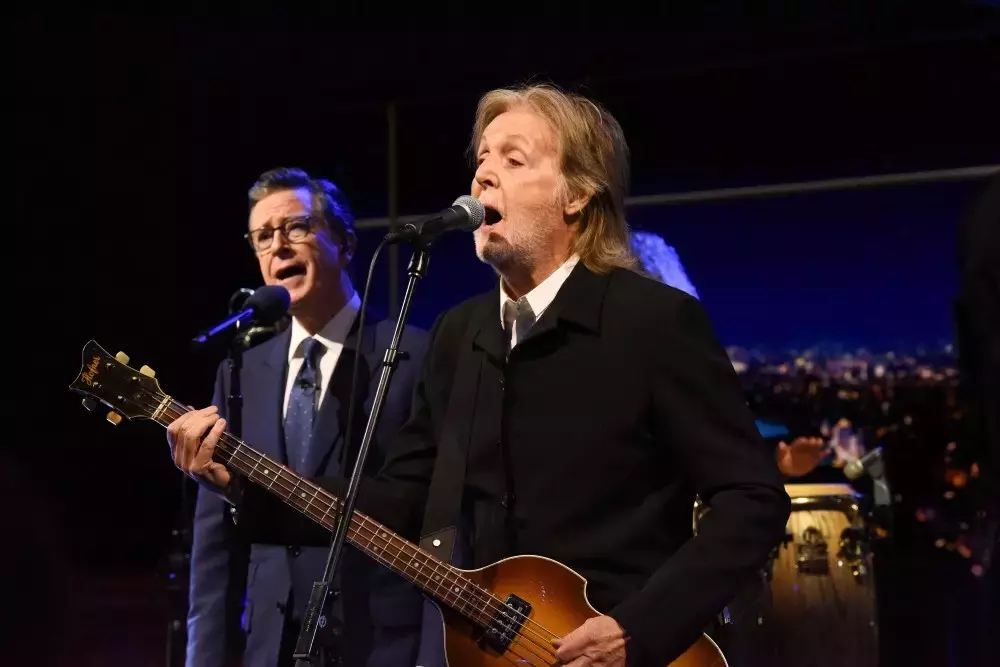
However, as the episode progressed, Colbert found himself unable to escape his established persona, and the final show inadvertently underscored the show's diminishing relevance. The host's perceived shortcomings in both interview skills and sketch comedy became apparent. During an interview with Paul McCartney, a fitting guest given his association with the Ed Sullivan Theater through The Beatles, Colbert frequently interrupted him. A particularly cringeworthy moment involved Colbert attempting to assert his importance by inquiring if McCartney had ever met the Pope, a question posed solely to highlight Colbert's own past encounter and thus, his perceived prestige. This awkward exchange echoed a previous, underdeveloped comedic bit where an actor portraying Pope Leo comically complained about the hot dogs provided at the theater, underscoring the show's creative missteps.
A Baffling Sketch and Questionable Guest Interactions
Given the extensive lead time, one might have expected a more polished and compelling final show. The most perplexing segment was a disastrous pre-recorded sketch involving a wormhole consuming his studio, which consumed a significant portion of the second half. While ostensibly a political commentary on the paradox of a top-rated show being canceled, it proved to be a considerable waste of time. Although fellow late-night hosts like Kimmel, Fallon, and Meyers commendable appeared to support Colbert's finale, their contributions felt largely undirected, suggesting that whatever material Colbert had prepared was simply not up to par. If this was an attempt to retaliate against CBS, the network ultimately emerged victorious.
The Host's Prominence Over Musical Performances
Adding to the perplexing choices, Colbert's role as a backup vocalist during McCartney's rendition of 'Hello, Goodbye' felt redundant, raising questions about his need to be at the forefront when he had already received extensive accolades. This mirrored a similar instance where he danced alongside David Byrne in the show's final week. The reviewer nostalgically contrasted this with the more reserved approach of Colbert's predecessor, David Letterman, who seemed disinclined to frequently perform with musical guests, suggesting a shift in the show's dynamic long before its cancellation.
Ego and the Evolution of the Show's Message
Previous commentary has highlighted Colbert's ego in the show's concluding phase, as numerous guests were allowed to eulogize his contributions to democracy. McCartney's eagerness to discuss his own musical career seemingly caught Colbert off guard, perhaps accustomed to a different tenor from his guests. While 'The Late Show' initially offered comfort during turbulent political times, particularly during Trump's first and early second terms, it had more recently devolved into celebrating its past achievements. The show's positive impact on its audience is undeniable, but it might have been time to move on. Colbert is expected to continue his career, potentially on a new platform, with the hope that a period of introspection might refine his comedy, making it more consistently sharp and less prone to the narrative indulgences seen in his final episode.