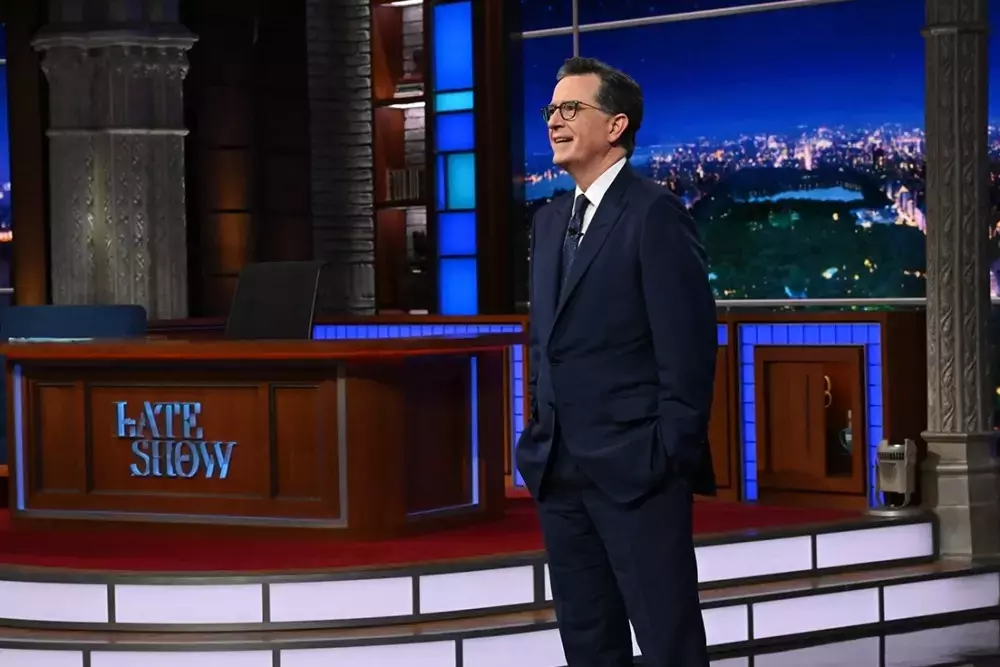
The concluding episode of "The Late Show With Stephen Colbert" captivated an unprecedented audience, setting a new record for weeknight viewership. This significant milestone was reached amidst the show's controversial cancellation, leading to a memorable farewell that brought together an array of celebrity guests for a nostalgic send-off from the historic Ed Sullivan Theater. The overwhelming viewer response underscores the program's enduring impact and the public's emotional investment in its final moments.
The series finale of "The Late Show With Stephen Colbert" drew an extraordinary 6.74 million viewers, establishing it as the most-watched weeknight episode in the program's run. This remarkable achievement not only eclipsed the show's first-quarter average of 2.69 million viewers but also surpassed the 6.55 million viewers who tuned in for its premiere on September 8, 2015. While these figures highlight a significant viewership, they remain distinct from the show's all-time record, which was set by its post-Super Bowl broadcast on February 7, 2016, attracting a massive 20.55 million viewers. This earlier peak benefited from a later start time of 10:54 p.m., indicating the unique circumstances that can influence television ratings.
Record-Breaking Farewell for "The Late Show"
The final broadcast of "The Late Show With Stephen Colbert" secured a remarkable 6.74 million viewers, making it the most-watched weeknight episode in the show's history. This impressive figure not only highlights a substantial increase from its typical audience but also surpasses the viewership of its initial premiere, underscoring the finale's significant draw. The show's peak viewership was observed during a post-Super Bowl special in 2016, which amassed over 20 million viewers. The strong performance of the finale, however, signifies a powerful closing statement for the series.
The concluding episode of Stephen Colbert's tenure as host achieved a new milestone, drawing 6.74 million viewers, a number that establishes it as the program's most-watched weeknight telecast. This viewership figure represents a considerable leap from the show's average quarterly audience of 2.69 million and also exceeded the 6.55 million viewers who tuned in for its debut back in 2015. While this marks a significant achievement for a weeknight broadcast, it is important to note that the all-time high for "The Late Show" remains its post-Super Bowl episode on February 7, 2016, which, with a later start time, captivated an audience of 20.55 million. The finale's success demonstrates a powerful public engagement with its conclusion, reinforcing its cultural impact.
A Star-Studded Send-off from the Ed Sullivan Theater
The finale was enriched by a host of celebrity guests, culminating in a poignant performance by Paul McCartney, who symbolically turned off the lights at the Ed Sullivan Theater. This moment paid homage to the venue's rich history, particularly its connection to The Beatles' iconic 1964 appearance. The episode also featured a musical collaboration between McCartney, Colbert, Elvis Costello, and past and present bandleaders, creating a memorable farewell for the cherished late-night program.
The final installment of "The Late Show" was a memorable occasion, featuring an array of prominent figures and heartfelt moments. Among the surprise guests was legendary musician Paul McCartney, who participated in a symbolic act of turning off the lights in the historic Ed Sullivan Theater, a venue famously associated with The Beatles' debut on "The Ed Sullivan Show" in 1964. This gesture underscored the historical significance of the location and the legacy of the program. The episode also showcased a unique musical collaboration, with McCartney, Colbert, Elvis Costello, former bandleader Jon Batiste, and current bandleader Louis Cato performing The Beatles' "Hello Goodbye," alongside Costello's "Jump Up." The finale also saw appearances from a star-studded lineup including Bryan Cranston, Paul Rudd, Ryan Reynolds, and various late-night hosts, making it a grand celebration of the show's run.