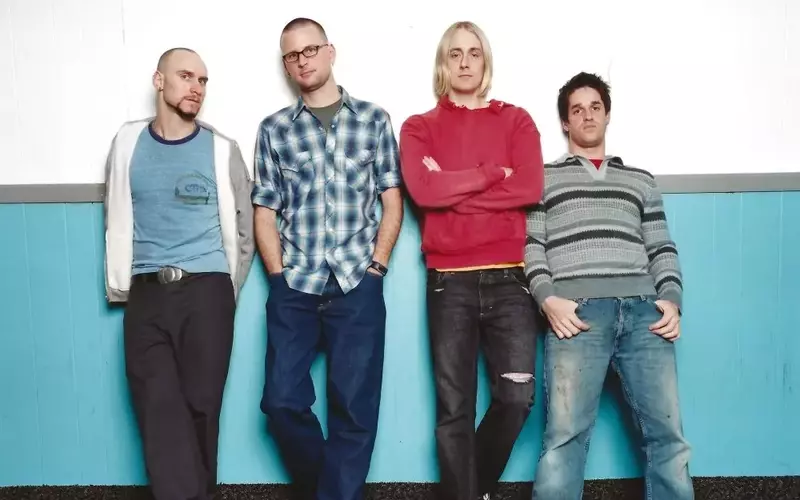

After a two-decade-long hiatus, the pop-rock ensemble Spymob has made a triumphant return, releasing their latest full-length album, 'Another Night'. This reunion marks a significant moment for the band, who once gained prominence as the backing group for Pharrell Williams' N.E.R.D. The new album, steeped in their signature synth-pop sound with touches of yacht rock, signals a fresh chapter for the trio, now operating as an independent entity and embracing creative freedom.
Spymob's Resurgence: A Journey from Disbandment to 'Another Night'
In 2005, the pop-rock quartet Spymob, having extensively toured as the opening and backing act for N.E.R.D., decided to conclude their musical journey. After navigating the complexities of major record labels, including an initial setback with Epic Records before releasing their debut album 'Sitting Around Keeping Score' through Ruthless Records, the band members felt they had reached a natural culmination. Lead singer and pianist John Ostby, reflecting on their decision, noted that after three years of relentless touring and promoting Spymob alongside N.E.R.D., the momentum was naturally winding down, necessitating either a complete reimagining of the band's future or a definitive halt. Ostby chose the latter, concluding that it was time to step away.
Almost two decades later, in January 2024, a renewed sense of curiosity sparked in their group chat, igniting discussions about a potential reunion. The members, Ostby, guitarist Brent Paschke, and drummer Eric Fawcett, had since forged separate professional paths. Ostby and Fawcett became therapists in Minnesota, while Paschke established a successful career in Los Angeles as a session musician, contributing to works by renowned artists such as Pharrell Williams, Frank Ocean, and Post Malone. Despite the geographical distance and established individual careers, the collective enthusiasm for a comeback was undeniable, setting the wheels in motion for their return.
Ostby initially found the idea of a reunion daunting, given the members' scattered locations and the passage of time. He acquired an electronic keyboard, and soon, new musical concepts began to emerge. This creative resurgence culminated in 'Another Night,' their first album in over 20 years. The record seamlessly blends the synth-pop sensibilities of their earlier work with contemporary yacht rock influences. Tracks like 'Forever in Time' deliver a smooth disco groove, while the title track echoes the subtle chord progressions and harmonious background vocals reminiscent of 'Sitting Around.'
Now operating independently, Spymob cherishes the autonomy to steer their artistic direction. 'Another Night' was initially made available for purchase on Bandcamp in early June, with individual singles preceding its official streaming debut scheduled for September 1. This staggered release strategy, termed a 'waterfall strategy,' was deemed appropriate by the band, acknowledging their limited social media presence and prolonged absence from the mainstream music industry.
Fawcett describes the reunion as fulfilling "unfinished business," highlighting unresolved aspects of their past musical endeavors, such as digital distribution. He emphasizes that maintaining their friendship was paramount, and the passage of time has brought a new level of maturity to their roles as individuals and musicians. Fawcett acknowledges the rarity of a band's enduring collaboration and the privilege of reconnecting to create music on their own terms, finding immense satisfaction in the creative process and the resulting art.
Spymob's journey began in the early 1990s as Reno, gaining local recognition in Minneapolis and releasing independent EPs, including the 'Spymob' EP in 1999. Although briefly signed and subsequently dropped by Epic Records in 2001, their talent caught the attention of Williams and Hugo, who signed them to Star Trak under Arista. This pivotal moment led to their collaboration with N.E.R.D., recording live instrumentation for the re-release of 'In Search Of…' in 2002 and touring as both an opening act and backing band.
Fawcett reflects on the N.E.R.D. collaboration as an invaluable opportunity to reach a broader audience. A significant highlight was the Neptunes' inclusion of Spymob's song 'Half-Steering' on their 'Clones' compilation. Paschke expresses gratitude for being dropped by Epic, as it ultimately led to their impactful partnership with Williams and Hugo. However, after the eventual release of 'Sitting Around Keeping Score' in 2004, the financial and logistical demands of the music industry, coupled with family responsibilities, led them to discontinue making music as a band, though their camaraderie remained intact.
The band has no immediate plans for live performances, prioritizing finding the right opportunities. Nevertheless, Ostby affirms that 'Another Night' is just the beginning of Spymob's new era. The trio is already well into recording their next album, with plans for a release next year, committed to continually creating new music. Fawcett expresses deep satisfaction with the collaborative process, emphasizing the mutual support and constructive challenges among the members, concluding that their passion for creating music together will endure, regardless of external reception.
The return of Spymob serves as a powerful testament to the enduring passion for music and the strength of long-standing friendships. Their story highlights that creative endeavors, even after extended pauses, can be rekindled with newfound independence and maturity, proving that it's never too late to pursue artistic fulfillment. It also underscores the importance of resilient bonds in navigating the unpredictable currents of the music industry and personal lives.