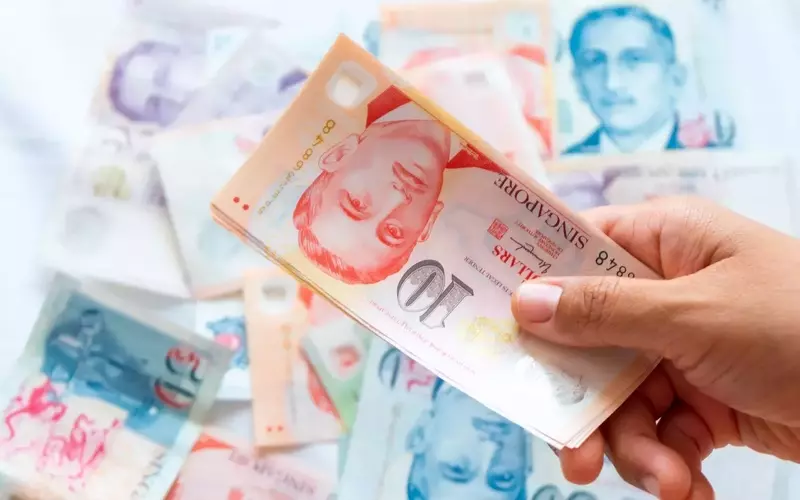

The Singapore Dollar (SGD), the official currency of Singapore, is recognized for its remarkable stability and integral role in global commerce. Issued by the Monetary Authority of Singapore (MAS), the SGD, denoted as S$, exemplifies Singapore's robust and meticulously managed economy. Its journey began in 1967, following Singapore's separation from the Federation of Malaysia, initially under the Board of Commissioners of Currency before MAS took over in 2002. This currency's resilience is further affirmed by a rare AAA rating from Fitch Ratings, signaling strong economic fundamentals even amidst global challenges like the COVID-19 pandemic. The SGD is a testament to Singapore's strategic positioning as a leading financial and trading hub, drawing significant offshore investment and entrepreneurial activity.
The Singapore dollar's historical trajectory showcases its evolution into a globally significant currency. Post-independence in 1967, it maintained parity with the Malaysian ringgit until 1973. It was also temporarily linked to the British Pound Sterling and the U.S. Dollar. However, since 1985, the MAS has managed the SGD within an undisclosed currency band to mitigate imported inflation and preserve export competitiveness. This careful management has contributed to the SGD becoming the 12th most traded currency worldwide, accounting for approximately 2.2% of daily global currency trading volume, equating to an average of $215 billion daily. Its impressive performance, particularly since the 2007–2008 financial crisis, highlights Singapore's stable economy and attractive business environment.
As of April 2026, the total Singapore dollar currency in circulation stood at approximately S$68.9 billion. The currency's integrity is bolstered by being fully backed by gold, silver, and other assets held by Singapore's central bank. Fitch Ratings’ reaffirmation of the SGD's AAA rating in late 2020 underscores the nation-state's exceptionally strong external and fiscal balance sheets, high per capita income, sound macroeconomic policies, and a robust business climate. These unique features contribute to the SGD's reputation as a reliable and strong currency on the international stage.
Singapore's economic prowess, deeply intertwined with the SGD, dates back to the early 19th century when it emerged as a key trading post under the British East India Company. After gaining independence in the 1960s, Singapore rapidly transformed into a high-income nation, driven by thriving manufacturing and services sectors. It remains a pivotal financial services center and an essential port for the region. The World Bank recognizes Singapore for having one of the world's most business-friendly regulatory environments, an impressive feat for a small city-state with a population of about 6.03 million as of 2024. Singapore is proudly counted among the 'Four Asian Tigers,' alongside Hong Kong, Taiwan, and South Korea, all noted for their sustained high growth rates and transformation into wealthy nations.
Travelers and foreign exchange market participants frequently encounter the USD/SGD exchange pair. As of June 2026, one SGD was valued at roughly $0.77 USD. The currency experienced a 52-week trading range against the U.S. dollar between $0.763 and $0.795 in 2025, benefiting from stable domestic monetary policies and a weaker U.S. dollar. For those exchanging currency, banks and exchange offices typically apply fees of 3% to 5% of the posted exchange rate, affecting both conversions to and from Singapore dollars.
The Singapore dollar, introduced in 1967, stands as a cornerstone of financial stability, recognized globally for its strength and prudent management. Its impressive performance on the international stage, coupled with Singapore's dynamic economy and business-friendly policies, solidify its role as a trusted currency and Singapore's position as a leading global financial hub