
Turkish director Reis Çelik's latest cinematic offering, 'Night of Blindness,' is making waves at the Shanghai International Film Festival, captivating audiences with its intense portrayal of a woman's harrowing fight for survival during the 1980 Turkish military coup. This black and white feature, rooted in the director's own past, transcends a mere recounting of personal trauma to delve into deeper, universally resonant emotions like fear and the human spirit's resilience. The film distinguishes itself by focusing on shared human experiences, a deliberate choice by Çelik to foster a broader connection with viewers across cultural divides, urging a confrontation with historical realities for individual and national progress.
Turkish Director Reis Çelik's "Night of Blindness" Shines at Shanghai International Film Festival
In June 2026, at the esteemed Shanghai International Film Festival, Turkish filmmaker Reis Çelik's profound work, 'Night of Blindness' (Kas Film), swiftly distinguished itself as a leading contender for the coveted Golden Goblet award. The film plunges viewers into a night of gripping tension, chronicling a woman's desperate flight from persecution during the 1980 Turkish military coup. Filmed in striking black and white, the narrative centers on a left-wing activist, portrayed by Özge Arslan, seeking refuge from the encroaching military authorities. Her precarious safety is entrusted to workers at a construction site, where she silently witnesses the brutal interrogations conducted by a ruthless inspector, played by İştar Gökşeven, as he relentlessly closes in on her hiding place.
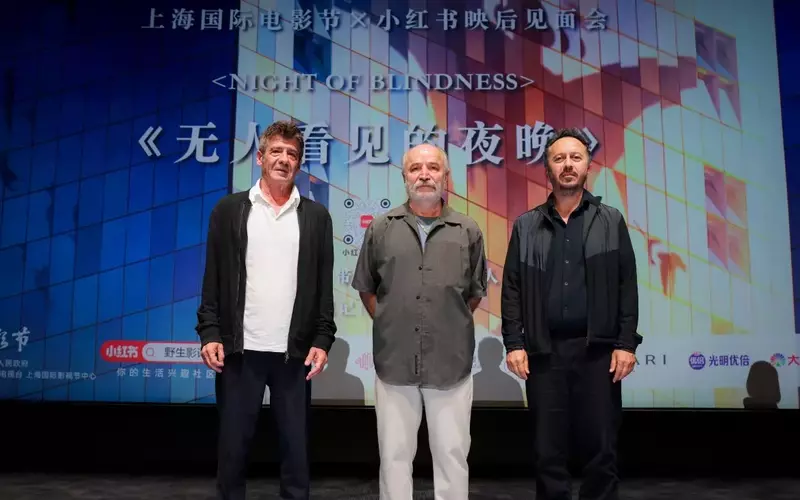
Remarkably, the film draws directly from Çelik's personal experiences, a revelation that emerges during the closing credits, accompanied by a heartfelt acknowledgement to those who aided his own escape. Yet, Çelik emphasizes that his intention was not to simply re-enact past traumas. Instead, he sought to tap into fundamental human emotions, particularly fear, to create a story that resonates globally. During his introduction to the media, Çelik articulated his vision: “Despite its setting in a distant land, the story explores universal human experiences. Regardless of our origins, we share common emotions.” He further elaborated on the film's broader message, suggesting that society often chooses to ignore uncomfortable truths. By drawing on Turkey's turbulent political history, he aims to highlight the imperative of confronting historical realities for both individual growth and national advancement.
'Night of Blindness' is the second installment in Çelik’s 'Night Trilogy,' following his 2012 Berlin International Film Festival Crystal Bear winner, 'Night of Silence.' The director’s choice of a nocturnal setting is central to his artistic vision. “In the dark of night, even the slightest detail or a faint glimmer of light becomes profoundly apparent,” Çelik explained. This intensity extends to his minimalist storytelling approach, believing in humanity's innate capacity for understanding. He contends that a single, well-executed glance can convey a complex narrative and enduring emotion, which motivated his decision to confine the entire film's timeline to a solitary night. The winners of this year's Golden Goblet awards are eagerly anticipated, with the announcement scheduled for June 20.
Reis Çelik's 'Night of Blindness' serves as a poignant reminder of the enduring power of cinema to transcend personal narratives and explore universal human conditions. The film's ability to transform individual trauma into a collective exploration of fear and resilience underscores the importance of art in prompting reflection on history and societal progress. It highlights how filmmakers can utilize their own experiences not for self-indulgence, but as a lens through which to examine broader truths, ultimately fostering empathy and understanding among diverse audiences. The deliberate aesthetic choices, such as the black and white cinematography and the concentrated timeline, amplify the film's emotional impact, proving that powerful storytelling often lies in focused intensity rather than expansive narratives. This work reinforces the idea that confronting difficult pasts, through artistic expression, is crucial for both personal and collective healing and growth.