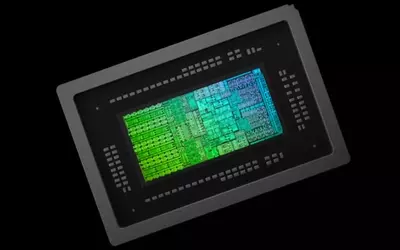
Nvidia, in collaboration with Microsoft, is poised to redefine personal computing with its new RTX Spark platform. This initiative will introduce a range of laptops, desktops, and workstations powered by Windows on Arm, signaling a long-term commitment to this new ecosystem with a roadmap extending to 2030. The inaugural Blackwell RTX Spark, featuring 6144 GPU cores and 20 Grace CPU cores, highlights a significant leap in integrated hardware design. This development promises to deliver enhanced performance and efficiency across various computing tasks, including gaming.
Nvidia's Vision for the Future of PC Architecture
Nvidia, in partnership with Microsoft, is launching the RTX Spark platform, aiming to revolutionize personal computing. This new line of devices—including laptops, desktops, and workstations—will operate on Windows using Arm-based processors. This strategic move signifies Nvidia's ambitious plans to innovate the PC landscape, with a long-term development roadmap that extends until at least 2030. The initiative was unveiled by Jensen Huang during a recent conference, where he emphasized the comprehensive reinvention of the PC experience.
The RTX Spark platform will evolve through several architectural generations, beginning with Grace Blackwell in 2026, followed by Vera Rubin in 2027/2028, and Feynman in 2030. The initial Blackwell RTX Spark is designed with 6144 GPU cores, 20 Grace CPU cores, and an impressive 128 GB of unified LPDDR5X memory, all integrated into a single package. While specific details for later generations like Vera Rubin and Feynman are still emerging, the commitment to LPDDR6 memory for Vera Rubin hints at continuous advancements in performance and efficiency. This long-term vision underscores Nvidia's dedication to pushing the boundaries of PC hardware and software integration.
Gaming Performance and Future GPU Expectations
A key aspect of the RTX Spark platform is its potential impact on gaming. Jensen Huang showcased the gaming capabilities of RTX Spark devices, demonstrating titles like 007 First Light and Forza Horizon 6. He highlighted a performance claim of “100 FPS at 1440p gaming with Ray Tracing and DLSS,” suggesting a robust gaming experience on the new Arm-powered machines. Although these are early benchmarks, they indicate Nvidia's focus on delivering high-fidelity gaming on this new architecture, addressing potential concerns about performance and emulation for a diverse range of games.
While the RTX Spark platform’s launch will align with Nvidia's new architectural releases, it also provides insight into the potential timing for future RTX graphics card generations. Given that the upcoming RTX Spark utilizes the Blackwell RTX architecture, it is reasonable to infer that subsequent RTX Spark generations will feature corresponding advancements in GPU technology. The rollout of Vera Rubin RTX Spark in 2028 and Feynman in 2030 could therefore serve as indicators for the release cycles of next-generation RTX discrete graphics cards. This strategic alignment suggests that the innovations introduced with RTX Spark will likely influence the broader GPU market, offering a glimpse into the future of high-performance gaming hardware.