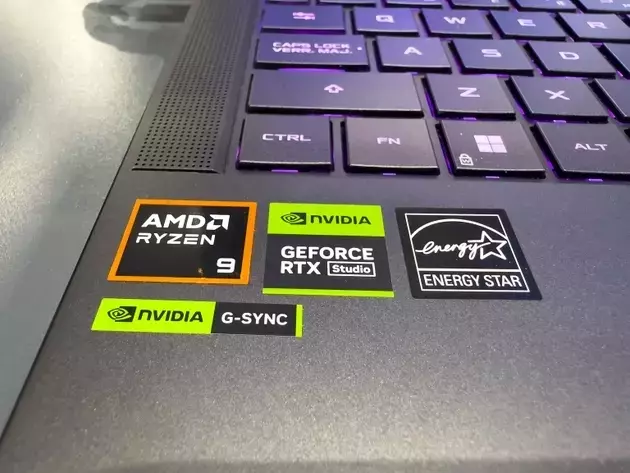
Nvidia Corporation is anticipated to surpass Advanced Micro Devices, Inc., primarily due to its robust, yet often overlooked, CPU technologies and a more attractive valuation. The introduction of Nvidia's Vera CPU is projected to unlock substantial revenue growth and expand its market reach. Conversely, AMD's elevated valuation suggests limited upside and increased downside potential.
Nvidia's Strategic Edge in the CPU Landscape
Nvidia is positioned for significant growth in the CPU market, largely propelled by its impending Vera CPU launch. This new product line is forecasted to generate approximately $20 billion in revenue, marking a substantial expansion of Nvidia's total addressable market (TAM). The company's strategic focus on AI-driven technologies has garnered considerable attention, but its advancements in CPU capabilities remain a key, often underestimated, asset. With major industry players already expressing interest, the adoption of Vera CPUs is expected to be swift, further cementing Nvidia's competitive advantage. This move enables Nvidia to diversify its revenue streams beyond its dominant GPU business, leveraging its comprehensive ecosystem to offer integrated solutions that cater to the evolving demands of artificial intelligence and high-performance computing.
A critical factor bolstering Nvidia's position is its attractive valuation. Currently, Nvidia shares are trading at a significant discount compared to historical averages, with a forward price-to-earnings (P/E) ratio of 17x for the fiscal year ending January 2028. This contrasts sharply with AMD's forward P/E of 36x for December 2027. This disparity in valuation suggests that Nvidia offers a more compelling investment opportunity, especially when considering its projected growth and market expansion. The market's current assessment may not fully reflect the potential impact of Nvidia's CPU innovations, providing an entry point for investors. The company’s integrated approach, combining cutting-edge GPUs with powerful new CPUs, creates a synergistic effect that enhances overall system performance, making its offerings highly desirable for data centers, enterprises, and research institutions.
AMD's Valuation Concerns and Market Dynamics
Advanced Micro Devices (AMD) faces challenges due to its elevated valuation, which may limit its future growth potential and increase investment risk. With a forward P/E of 36x for December 2027, AMD's stock appears to be trading at a premium that might be difficult to sustain. This stretched valuation suggests that much of the company's anticipated growth is already priced into its shares, leaving little room for further multiple expansion. Investors should be wary of the potential for a downward re-rating if market expectations are not met or if competition intensifies. The current market environment, characterized by intense competition in the semiconductor sector and rapid technological advancements, demands robust performance to justify high valuations. AMD's reliance on its existing product lines, while successful, may not be sufficient to maintain its premium in the face of Nvidia's aggressive expansion into new markets.
The competitive landscape between Nvidia and AMD is becoming increasingly intricate, extending beyond traditional GPU battles to encompass the burgeoning CPU market. While AMD has a strong presence in the CPU segment with its Ryzen and EPYC processors, Nvidia's entry with Vera CPUs introduces a formidable new contender. The perceived overvaluation of AMD's stock could make it more vulnerable to market corrections or shifts in investor sentiment, particularly as Nvidia demonstrates its prowess in integrated computing solutions. Furthermore, AMD's future growth trajectory will heavily depend on its ability to innovate and expand its market share against a technologically diverse and financially strong competitor. The comparison between the two companies highlights a strategic divergence: Nvidia is capitalizing on undervalued assets and new market entries, while AMD navigates a period where its established market position is challenged by an already-high valuation and intensifying competition.