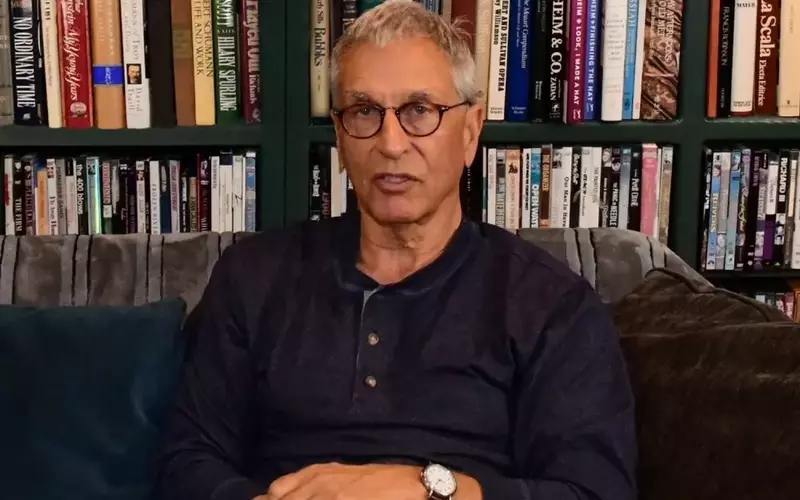

During a recent appearance at the Italian Global Series Festival, renowned director Nicholas Meyer offered insights into the demanding production of "Star Trek II: The Wrath of Khan," a film widely regarded as a pinnacle of the franchise. He recounted the significant budget constraints that shaped its development, contrasting it with the prior installment's lavish spending. Beyond this historical account, Meyer also delved into contemporary trends in entertainment, expressing concerns about the fragmentation of collective viewing experiences in an era dominated by short-form digital content and mobile consumption.
Meyer’s recollections shed light on the formidable hurdles encountered during the making of "The Wrath of Khan." Following the first "Star Trek" film's considerable budget of $45 million in 1979, the studio sought a more economical approach for its successor. Producer Harve Bennett, a celebrated figure in television, was tasked with creating a superior film with substantially fewer resources. Meyer proudly noted that the sequel was ultimately made for a mere $11.2 million, a fraction of its predecessor's cost, demonstrating an impressive feat of creative efficiency.
Initially, Meyer admits he wasn't a dedicated "Star Trek" fan, confessing he didn't fully grasp the series' appeal during its television run. He overlooked the groundbreaking themes of diversity and unity that were central to the show's ethos, finding the costumes rather simplistic. However, a significant revelation struck him when preparing for the film: he realized that Captain Kirk mirrored the adventurous spirit of Captain Horatio Hornblower from C.S. Forester's novels. This connection provided Meyer with a fresh perspective and a clear direction for shaping the film's narrative and character arcs, transforming his initial indifference into a passionate understanding of the franchise's potential.
Meyer further discussed the increasing convergence of cinema and television, reflecting on his dual career in both mediums. He observed a pervasive shift towards shorter content formats, attributing this to declining attention spans, even among film students. He cited the failed Quibi experiment from years past as a precursor to today's prevalence of ultra-short, vertically oriented videos, many of which are financed internationally. Despite this trend, Meyer staunchly advocates for the enduring power of communal experiences, such as attending a play, opera, ballet, or film in a shared space. He lamented the erosion of this collective engagement, viewing it as a fundamental loss for humanity in an age dominated by solitary digital consumption.
Addressing the structural differences between series formats, Meyer distinguished between standalone events, limited series, and ongoing narratives. He drew parallels between extended television series and classic serialized novels by authors like Charles Dickens and Alexandre Dumas, highlighting how these formats allow for profound character development, as exemplified by Walter White's transformation in "Breaking Bad." Nevertheless, he acknowledged the heightened pressure to captivate audiences in today's competitive media landscape, where formulaic demands, such as constant cliffhangers, are increasingly prevalent. These competitive and cultural restrictions, he suggests, make it progressively challenging for creators to achieve artistic originality and maintain audience engagement.
Ultimately, Nicholas Meyer's reflections offer a comprehensive look at the intricate process of bringing a cinematic classic to life under stringent conditions and a thoughtful critique of the contemporary media environment. His journey from an outsider's skepticism to a visionary director underscores the transformative power of a compelling narrative framework. His concern for the decline of shared cultural experiences serves as a poignant reminder of the communal magic inherent in traditional storytelling, advocating for its preservation amidst rapid technological shifts.