
Innovating Coffee Production: Nestlé's Bold Step in Thailand
Nestlé's New Venture: A Landmark Investment in Thai Coffee Production
Nestlé is committing 563 million Swiss Francs (approximately $697.6 million) to erect a dedicated coffee manufacturing plant in Thailand. This substantial investment signifies the company's resolve to independently manage its coffee production in the country, especially after the conclusion of a significant local partnership.
Transition from Joint Venture: The End of an Era with QCP
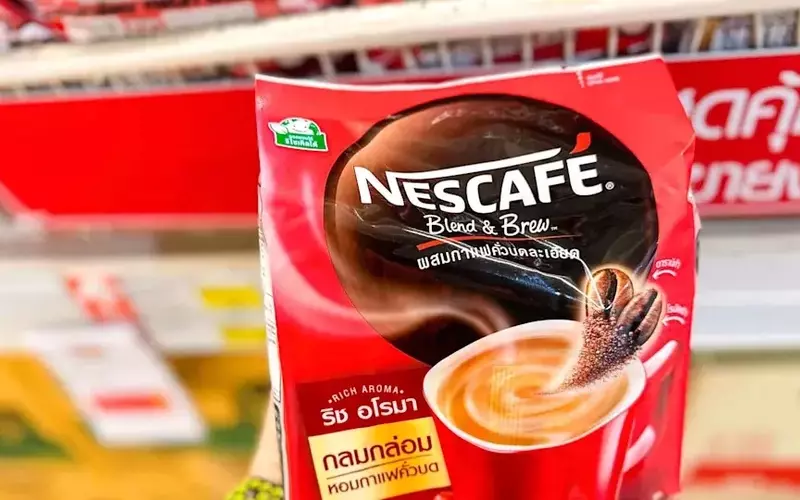
From 1990 until December 2024, the Swiss food and beverage behemoth collaborated with Quality Coffee Products (QCP) to produce its Nescafé range in Thailand. The termination of this 34-year joint venture led to legal proceedings, which ultimately sided with Nestlé earlier this year, paving the way for its new solo initiative.
Maintaining Supply: Nestlé's Interim Strategies Post-JV
Since early 2025, Nestlé has employed a multi-faceted approach to ensure the continued availability of Nescafé beverages in Thailand. This involved integrating production lines within its existing factories, engaging local manufacturers for outsourcing, and importing products temporarily to meet market demand.
Strategic Location and Product Range of the New Facility
The upcoming manufacturing site, situated in Thailand's Samut Prakan province, is strategically positioned to cater to both the domestic Thai market and surrounding international regions. This facility will be instrumental in producing a diverse array of Nescafé products, including soluble coffee, ready-to-drink options, and specialized coffee blends, alongside housing a crucial distribution center.
Technological Advancements and Operational Timeline
Slated to commence operations in the latter half of 2028, the new factory will boast the latest technological innovations and advanced AI-driven systems. This commitment to cutting-edge technology underscores Nestlé's vision for efficient and high-quality production.
Thailand's Dynamic Coffee Market and Nestlé's Long-Standing Presence
Nestlé identifies Thailand as a "dynamic" coffee market, valued at approximately 1 billion Swiss Francs. With over 130 years of operation in the country and seven existing factories, as detailed in its 2025 annual report, Nestlé has a deeply established footprint in the region.
Leadership's Vision: Enhancing Southeast Asian Coffee Capacity
Remy Ejel, Executive Vice President and CEO of Nestlé Zone Asia, Oceania and Africa (AOA), highlighted that the new facility will significantly augment Nescafé's production capacity across Southeast Asia. He emphasized its contribution to the sustained growth of the company's coffee business in one of the world's most vibrant coffee markets.
Economic Impact and Alignment with National Goals
The new factory is expected to create over 500 employment opportunities and will prioritize sourcing ingredients locally. This initiative has received support from Thailand's Board of Investment, aligning seamlessly with the government's objectives for fostering a bio-circular green (BCG) economy.
Broader Investment in Coffee Production: A Global Strategy
This Thai project is part of Nestlé's wider global strategy of investing in its coffee division. Last year alone, the company announced substantial investments, including approximately €15 million for its Girona factory in Spain to enhance packaging lines for instant coffee and capsules, and VND1.9 trillion (then $73 million) for expanding a coffee production facility in Vietnam's Dong Nai province. Additionally, Nestlé committed £28 million (then $36.7 million) to its Dalston plant in the UK for a new mixing facility and additional packing lines for its Nescafé Frothy Coffee range.
Coffee's Dominance in Nestlé's Powdered and Liquid Beverages Segment
In 2025, soluble coffee and coffee systems accounted for a significant 68.3% of sales within Nestlé's powdered and liquid beverages segment, generating 17.17 billion Swiss Francs. The company's annual review for the same year identified coffee, driven by its Nescafé, Nespresso, and Starbucks brands, as the primary growth engine for this division, which also includes popular products like Milo and Nesquik.