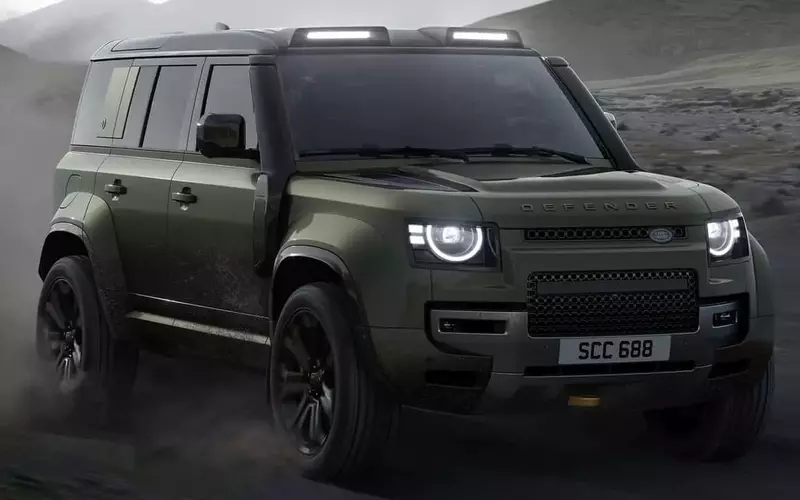

Land Rover has modified the engine performance of its Defender OCTA, specifically for the European market, to meet more stringent emission controls. This adjustment means the BMW-sourced 4.4-liter twin-turbo V8 engine will now generate 533 horsepower, a decrease of 93 horsepower from its previous 626 hp output. This change will result in a slightly slower acceleration, with the vehicle now reaching 62 mph (100 km/h) in 4.4 seconds, an increase of 0.4 seconds.
Despite the reduction in horsepower, the Defender OCTA's torque remains at 750 Nm (553 lb-ft), and engineers have refined the exhaust system to enhance the engine's sound. This recalibration is a direct response to the Euro 6e-bis emissions standard, a trend observed across the automotive industry. For instance, BMW previously downsized the European-spec M5's engine by 41 hp to adhere to similar regulations. Unlike some other models that integrate plug-in hybrid systems to offset power reductions, the OCTA maintains a V8-only configuration.
The BMW S68 V8 engine, which also powers Land Rover's Range Rover and Range Rover Sport, is designed to meet future Euro 7 standards, ensuring its relevance for the coming decade. Other luxury automakers like Porsche and Mercedes are also striving to maintain their large combustion engines into the next decade, demonstrating a commitment to these powertrains despite regulatory pressures. However, the future of such engines in Europe is increasingly uncertain, as manufacturers face a mandate to reduce fleet CO2 emissions by 90 percent by 2035 compared to 2021 levels. This regulatory landscape compels automakers to balance high-emission vehicles with a sufficient number of electric and plug-in hybrid models to avoid substantial financial penalties.
The automotive industry is in a transformative period, adapting to environmental regulations while striving to preserve the performance and legacy of iconic vehicles. This ongoing evolution highlights the delicate balance between innovation, compliance, and consumer preferences, shaping the future of motoring towards more sustainable practices.