
Celebrating Eight Decades of Cinematic Excellence and Global Discovery
The Enduring Vision: KVIFF's Approach to a Dual Anniversary
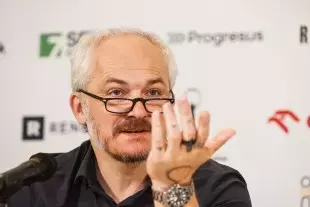
The festival's artistic director, Karel Och, explains that the selection process for this milestone year did not deviate significantly from their established methodology, though he acknowledges a potential subconscious influence from the double anniversary. His extensive research into the festival's archives, particularly for the 'Out of the Past' program, provided a deep connection to KVIFF's historical trajectory, especially its classic film sections.
Breaking New Ground: Expanding Global Reach
This year's lineup proudly features cinematic debuts from countries like Myanmar and Colombia, alongside the first-ever Swiss film in the Crystal Globe competition. Och emphasizes these "firsts" as a testament to KVIFF's commitment to presenting contemporary cinema from around the globe. He draws a parallel to the pioneering spirit of his predecessor, A. M. Brousil, who, in 1962, established a groundbreaking section dedicated to young and new cinematographies from Asia, Africa, and Latin America, facilitating crucial artistic exchanges between filmmakers like Glauber Rocha and Pier Paolo Pasolini.
A Legacy of International Perspective and Collaboration
Och affirms that a global outlook is deeply embedded in KVIFF's foundational principles. The festival consistently strives to include films from as many nations as possible in its main competition. This year, particular attention is given to films sourced from various works-in-progress sessions, such as the Colombian film Five Years, Four Months, discovered at San Sebastian, and the Swiss production A Happy Family, found at the Les Arcs Film Festival. This success, Och notes, reflects both KVIFF's reputation for supporting international cinema and the increasing global accessibility of industry platforms.
The Shrinking World: Connectivity and Cross-Cultural Storytelling
Och observes that technological advancements, despite their potential downsides, have significantly enhanced global connectivity, making it easier for filmmakers from diverse backgrounds to collaborate and share stories. He highlights the growing trend of films directed by individuals born in one country but produced in another, often exploring themes relevant to different cultural communities. An example is the competition entry Hijamat, a German film by an Iranian director set within the Turkish community in Germany, which beautifully illustrates how human stories transcend geographical and cultural boundaries, contributing to a rich tapestry of narratives.
The Abundance of Submissions: A Source of Discovery
KVIFF consistently receives a high volume of film submissions, ranging from 1,800 to 2,000 annually. While managing such a large number can be challenging, Och views it as a positive indicator. He believes that a greater pool of submissions increases the likelihood of uncovering hidden cinematic gems. For Och and his team, these numbers represent not a burden, but a gratifying validation of their work and the festival's esteemed position in the international film community.