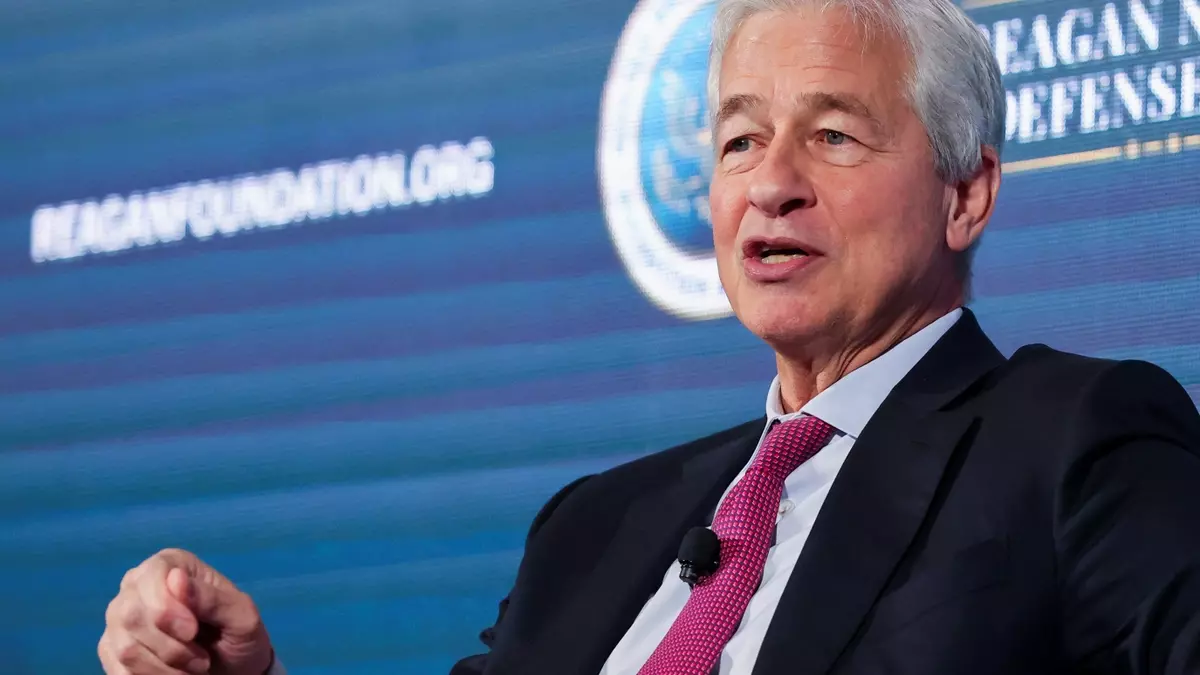
JPMorgan Chase CEO Jamie Dimon recently conveyed a robust sense of optimism regarding Wall Street's current momentum, noting an enthusiastic client base. However, this positive sentiment is tempered by an upward revision of the bank's projected expenses for 2026. While anticipating substantial growth in key revenue streams, Dimon remains watchful of underlying economic risks, echoing his characteristic cautious approach to market exuberance. This dynamic interplay of burgeoning market activity and prudent financial management defines JPMorgan's immediate strategic outlook.
The financial giant, JPMorgan, is experiencing a period of significant activity, with its CEO Jamie Dimon highlighting the buoyant mood among Wall Street clients. This enthusiasm is translating into higher revenue expectations, particularly in investment banking and trading, yet it also necessitates an increase in the bank's projected expenses for the upcoming year. Dimon's commentary reflects a strategic balance between capitalizing on current market opportunities and acknowledging potential economic headwinds. The bank's performance indicators suggest a robust quarter ahead, but with a keen awareness of broader market trends and cost management.
JPMorgan's Surging Revenue Projections and Client Confidence
JPMorgan's leadership, specifically CEO Jamie Dimon, has observed a marked resurgence in client confidence across Wall Street, which is directly contributing to optimistic revenue forecasts. The bank is anticipating a substantial uptick in both investment banking and trading revenues for the second quarter, projecting increases of 10% and 11% respectively compared to the previous year. This positive outlook is fueled by a combination of factors, including a general market exuberance, ongoing deregulation within financial services, and significant investments in artificial intelligence infrastructure, all of which are driving heightened activity levels among Wall Street firms. Despite the enthusiastic environment, Dimon maintains a degree of caution, drawing parallels to past periods of market highs before downturns, underscoring the importance of vigilance.
The current financial landscape is characterized by an energetic Wall Street, where JPMorgan's clients are demonstrating considerable eagerness to engage in various financial activities. This has led the bank to revise its revenue expectations upwards, with investment banking and trading sectors poised for double-digit growth. The prevailing market conditions, marked by strategic deregulation and substantial technological advancements like AI, have created fertile ground for increased transactional volumes and advisory services. Concurrently, rival institutions such as Bank of America are also forecasting strong trading and deal-making revenues, further validating the overall positive sentiment in the industry. However, Dimon, known for his pragmatic views, tempers this enthusiasm with a reminder of historical market cycles, advising a careful approach despite the current booming conditions, while also leaving room for potential strategic acquisitions in the future.
Navigating Rising Expenses and Macroeconomic Concerns
Amidst the positive revenue projections, JPMorgan is also confronting an anticipated rise in operational expenses, now forecasting an additional $1 billion above its earlier $105 billion estimate for 2026. This increase is primarily attributed to strong performance and a corresponding growth in compensation, a significant component of the bank's overall fee structure. While the higher expenses are a direct result of better-than-expected trading fees and overall business success, they highlight the ongoing challenge of managing costs in a dynamic economic environment. Beyond internal financial adjustments, Dimon also reiterated his long-standing concerns about potential inflationary pressures and the elevated valuation of asset prices, including JPMorgan's own stock, signaling a cautious stance on the broader economic outlook.
JPMorgan's financial strategy involves a careful balancing act between robust revenue generation and managing escalating costs. The bank's revised expense forecast, moving closer to $106 billion, is largely driven by its exceptional performance, particularly in trading, which has exceeded initial expectations. This increased expenditure, especially in employee compensation, reflects the competitive nature of the financial industry and the need to reward and retain top talent. Furthermore, CEO Jamie Dimon continues to voice reservations about the macroeconomic landscape, specifically warning about the likelihood of higher-than-expected inflation and the current overvaluation of various assets. His consistent message urges a degree of circumspection, even as the bank thrives, ensuring that while the institution capitalizes on present opportunities, it remains prepared for potential market shifts and challenges.