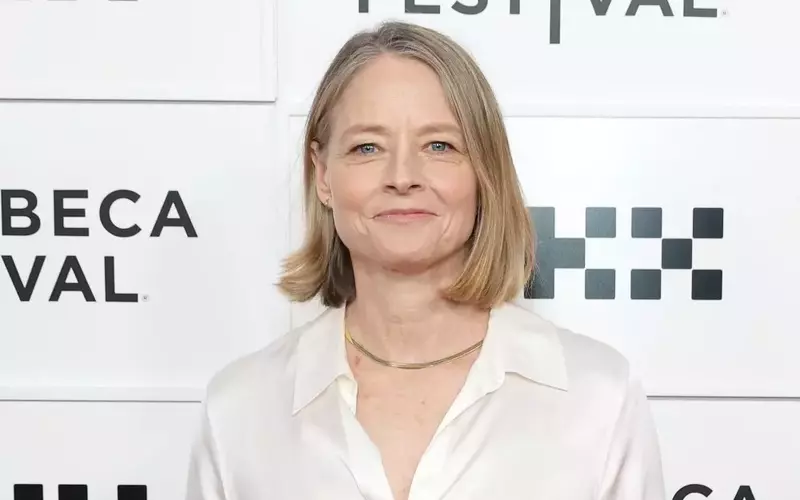

During a recent discussion at the Aspen Festival of Ideas, renowned actress Jodie Foster initiated a thought-provoking conversation regarding artificial intelligence's increasing influence on the film industry. Her remarks centered on Brad Pitt's racing movie, 'F1', which she playfully suggested might have been an AI creation due to its adherence to predictable narrative formulas and dialogue. Foster's observations underscore a broader concern within Hollywood about the potential for technological advancements to reshape traditional creative roles and artistic expression.
Foster elaborated on her perspective, noting the film's precise structural conformity, which she described as resembling a template learned in an educational setting. She pointed out that the actors' delivery of lines seemed to align perfectly with what a computer might generate for optimal impact at specific moments. While acknowledging the financial success of 'F1', Foster’s comments sparked a dialogue about how AI might be streamlining the filmmaking process, potentially at the cost of unique human ingenuity. She also touched upon the practical implications of AI, such as its ability to reduce costs by digitally replicating background actors, leading to discussions about job displacement and the need for unions to adapt to these changes.
Despite her critiques, Foster also recognized the constructive potential of AI. She mentioned its utility for tasks like previz (pre-visualization of movie scenes), which can aid filmmakers in planning production more efficiently. Foster shared an example from her recent film, 'My Private Life', where AI helped create a dreamlike sequence, proving that when guided by human vision, AI can enhance cinematic artistry. Her overall sentiment emphasized the importance of filmmakers mastering AI technologies to ensure that these tools serve human creativity rather than overshadowing it, fostering an optimistic outlook on how AI can be a powerful ally in crafting compelling and human-centric stories.
The integration of artificial intelligence into creative fields presents both challenges and opportunities. As technology continues to advance, maintaining a balance where human artistry and ethical considerations remain paramount is crucial. By embracing innovation while asserting creative control, the film industry can leverage AI to explore new narrative frontiers and produce works that resonate deeply with audiences, ensuring that technological progress enriches, rather than diminishes, the human element of storytelling.