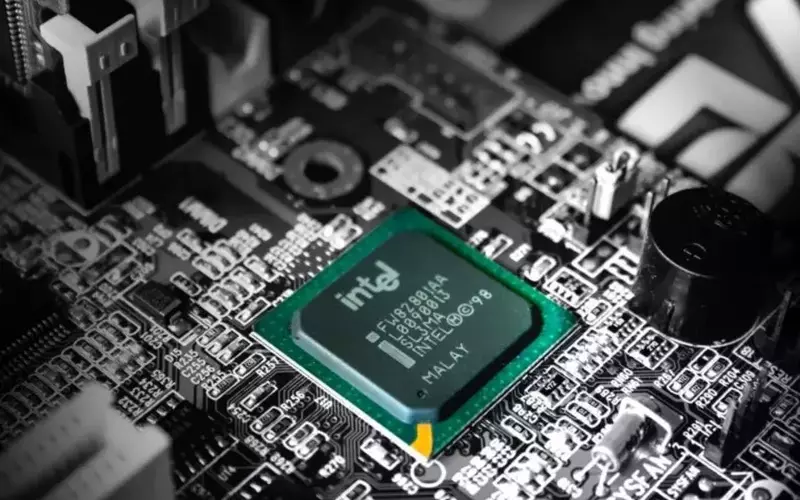

Intel (NASDAQ:INTC) has garnered significant attention, not solely for its technological advancements but also due to its inclusion in prominent investment portfolios. While political figures' endorsements can briefly influence stock perception, a deeper analysis reveals robust underlying factors propelling Intel's long-term potential. The company's strategic positioning within the artificial intelligence sector and its critical role in national defense infrastructure are key indicators of its enduring value, distinguishing it from transient market hypes and underscoring its intrinsic strength as an investment.
Intel's narrative has recently been intertwined with a former president's investment choices, particularly regarding its presence in a disclosed stock portfolio. Documents released by the U.S. Office of Government Ethics reveal Intel as a notable holding. This association garnered considerable media focus, as the government's acquisition of a substantial stake in Intel, facilitated by CHIPS Act grants, suggested a strategic national interest in the semiconductor giant. Furthermore, reports of brokered deals, such as one involving Intel and Apple for chip manufacturing, underscored the company's re-emerging influence in the tech landscape. These developments collectively contributed to a significant uptick in Intel's stock performance, turning around a once-struggling perception on Wall Street.
However, the company's trajectory is built on more than just high-profile endorsements. Fundamentally, Intel is capitalizing on a pivotal shift in the artificial intelligence landscape. The industry is transitioning from a training-heavy AI workload to one emphasizing inference and agentic AI. This evolution is rebalancing the architecture away from a GPU-dominant model towards a more CPU-centric approach, where CPUs act as the primary orchestration layer. Traditionally, the ratio of GPUs to CPUs in AI training environments was approximately 8:1. Now, for agentic AI, this ratio is reportedly shifting towards 1:1, or even favoring CPUs. This change plays directly into Intel's strengths, particularly with its Data Center and AI segment, which demonstrated a remarkable 22% year-over-year growth in the first quarter, achieving operating margins of 30.5%. Key strategic wins, such as the selection of Intel's Xeon 6 as the host CPU for Nvidia's advanced DGX Rubin NVL8 systems and a long-term agreement with Google for Xeon processors to power Google Cloud's AI operations, further solidify its position. On the manufacturing front, Intel has secured nearly $8.9 billion in government funding and is actively collaborating with Tesla's TeraFab consortium, alongside SpaceX and xAI, with its 18A node yields consistently improving by 7% monthly.
Investment firms have also taken note of Intel's resurgence. The Alpha Wealth Insiders Fund, for instance, highlighted its successful venture with Intel, citing an annualized return of approximately 133%. The fund's strategy was rooted in the belief that Intel, as the sole U.S. defense silicon chip foundry, was too strategically important to fail. This conviction led to significant investments at various price points, culminating in a profitable exit, showcasing the financial community's confidence in Intel's strategic importance and market potential.
In summary, while external factors such as political associations may draw initial attention, Intel's sustained growth and positive outlook are primarily anchored in its fundamental business strengths. The company's adept navigation of the evolving AI infrastructure, its critical role in domestic chip manufacturing, and its strategic partnerships with industry leaders collectively underscore its potential for continued expansion and relevance in the global technology arena. These elements form a compelling case for Intel's ongoing significance, irrespective of short-term market influences or high-profile affiliations.