Pixar's highly anticipated 'Toy Story 5' promises to deliver a fresh yet nostalgic experience, delving into the evolving lives of cherished characters while introducing new elements that reflect modern childhood. The creative minds behind the film address the thought process behind Woody's aged appearance, the nuanced portrayal of the new character Lilypad, and Jessie's emotionally resonant storyline. This installment also brings innovative technology into play, both within the narrative and in the animation process, ensuring a blend of heartwarming storytelling and cutting-edge visual artistry. It's a testament to the enduring power of imagination in an increasingly digital world.
Details from the 'Toy Story 5' Production Preview
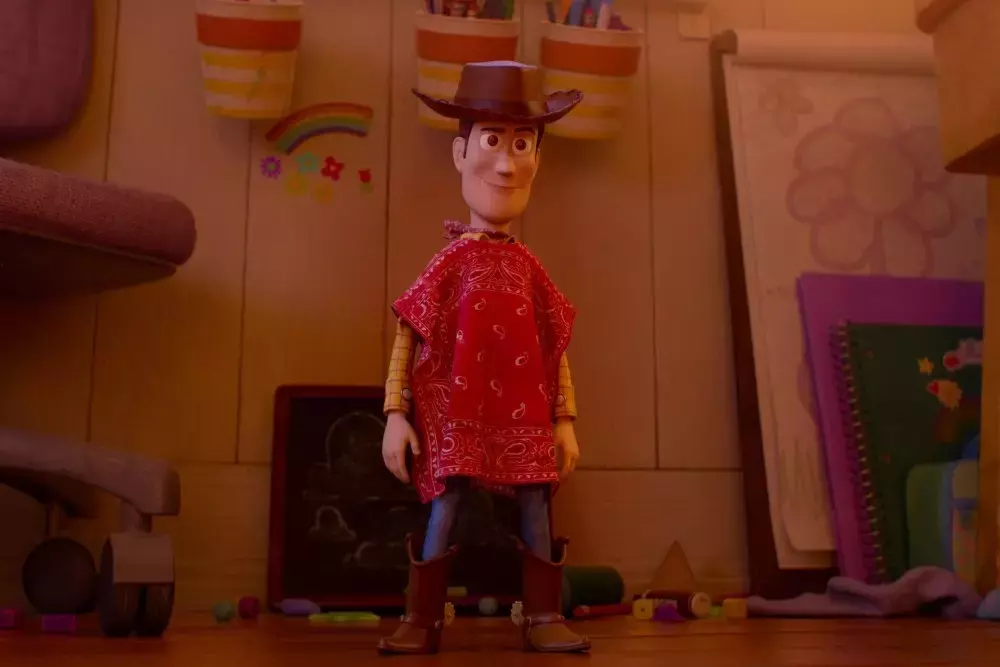
In a recent press preview held in Anaheim, insights into the upcoming 'Toy Story 5' were shared, revealing significant plot points and character developments. The film, scheduled for release on June 19, picks up several years after its predecessor. Fans will notice a visibly aged Woody, now sporting a bald spot and a red poncho, a reflection of his contented retirement from being dedicated to a single child. Andrew Stanton, the director, elaborated that Woody's new look symbolizes a life lived without the constant pressure of self-preservation, focusing instead on the well-being of other toys. Co-director McKenna Harris added that other aging gags, such as Woody being sun-bleached, were considered but ultimately not included.
A major thematic introduction is Lilypad, voiced by Greta Lee, a device representing the modern tablet-driven world. Initially perceived as an antagonist by the toys who fear obsolescence, Stanton clarified that Lilypad is not a villain but rather a symbol of Bonnie's evolving life phase. The filmmakers wrestled with portraying Lilypad's complex role, ultimately deciding against making her a straightforward antagonist to reflect the real-world nuance of technology. Producer Lindsay Collins highlighted the careful casting of Lee to ensure Lilypad was both appealing and not easily disliked.
The film also shines a spotlight on Jessie's character, who assumes a central role. Her storyline involves a poignant return to her former owner Emily's house, now inhabited by a new child named Blaze (Mykal-Michelle Harris). This narrative explores themes of abandonment and reconnection, forcing Jessie to confront her past. Stanton shared that he took on the project only after ensuring he could craft a story that addressed unresolved emotional arcs and integrated contemporary challenges like digital distractions impacting playtime.
New voice talents include Conan O'Brien as Smarty Pants, a tech toy designed for potty training, alongside Craig Robinson as Atlas and Shelby Rabara as Snappy, an older digital camera. These characters, described as older technological devices, highlight the evolution of toys. Production designer Bob Pauley emphasized the deliberate nostalgic design of these tech toys, which were then subtly altered to match the voice actors' personalities, such as Smarty Pants' yellow handle referencing O'Brien's hair.
Blaze, a key new character, signifies technological advancements in animation, particularly in rendering authentic curly hair. VFX supervisor Thomas Jordan detailed how Pixar developed a new system for animating fine hair details, allowing for greater diversity in future character designs. Bonnie's imagination is also explored with vibrant cinematic sequences, including a whimsical wedding scene that showcases her chaotic yet creative inner world. This imaginative play is contrasted with the pervasive influence of technology, reinforcing the film's core message about protecting and celebrating imagination.
Lastly, composer Randy Newman returns to score 'Toy Story 5,' bringing his signature blend of romanticism and cynicism. His work on this film is praised as some of his best, with promises of grand Western-inspired musical cues. The filmmakers also firmly stated that the creation of 'Toy Story 5' is a product of human artistry, not artificial intelligence, reaffirming Pixar's commitment to artists working collaboratively with advanced tools.
The evolution of children's play, from traditional toys to digital interactions, presents a compelling narrative for examination. 'Toy Story 5' masterfully navigates this changing landscape, reminding us of the enduring value of tangible playthings and the boundless nature of a child's imagination. It encourages parents and guardians to strike a balance between allowing children to explore technological advancements and fostering opportunities for imaginative, hands-on play. The film implicitly suggests that while technology is an undeniable part of life, it should complement, rather than completely replace, the magical world of traditional toys and creative exploration. It's a thoughtful commentary on modern childhood, urging us to cherish the unique joy and developmental benefits that come from imaginative engagement.