Mahjong, a game with deep historical roots, has resurfaced as the latest sensation within Hollywood's elite circles, eclipsing the prior enthusiasm for pickleball. This resurgence is fueled by a collective yearning for genuine social interaction in the wake of recent global events, coupled with the allure of beautifully crafted, collectible tile sets. Celebrities and industry insiders are captivated by the game's unique blend of strategy and chance, transforming it into a vibrant social ritual. Despite discussions surrounding the cultural origins and modern adaptations of mahjong, its cross-cultural appeal continues to grow, drawing in new enthusiasts who appreciate its communal spirit and intellectual engagement. The game's accessibility, allowing newcomers to quickly grasp its dynamics, contributes to its widespread adoption, fostering connections and friendly competition among players.
Hollywood's Mahjong Mania: A Deep Dive into the Latest Celebrity Pastime
In a surprising shift on May 23, 2026, the tile-based game of mahjong has captured the imagination of Hollywood, becoming the new darling of the social scene. Comedian Larry David, famous for popularizing pickleball, playfully declared his allegiance to mahjong in a March YES Network commercial, remarking, “What, are you too cool for mahjong?” This humorous embrace reflects a broader trend among celebrities and industry heavyweights. Larry David and his wife, Ashley Underwood, are reportedly taking lessons in Montecito, a locale where even royalty, like Meghan Markle, enjoys clacking tiles with her “mahj squad,” which includes designer Tracy James Robbins, entrepreneur Victoria Jackson, and former agent Jennifer Rudolph Walsh. Notably, Jackson and Walsh's Godmothers bookstore in Summerland has become a hub for mahjong games and lessons, solidifying the game's presence in high-profile social circles.
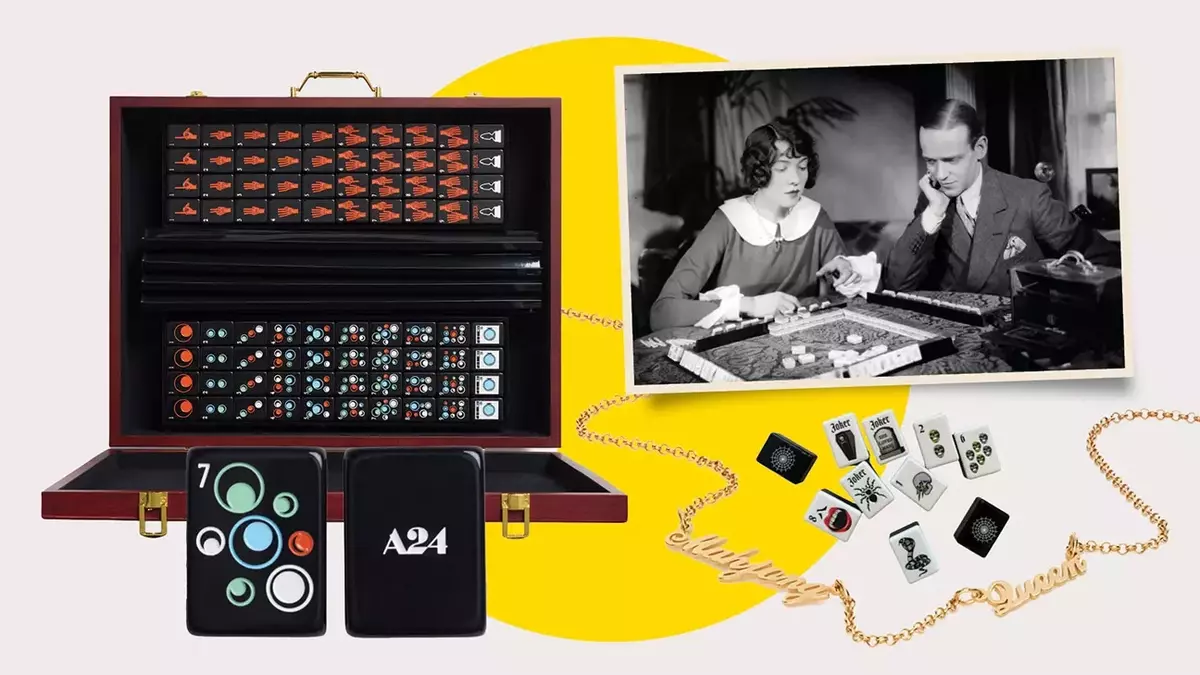
The game's initial rise in the 1920s, propelled by figures like Joseph Park Babcock and the endorsement of President Warren G. Harding, saw icons like Fred and Adele Astaire photographed at the mahjong table in London in 1926. Today, its renewed popularity, particularly post-pandemic, is attributed to a longing for face-to-face gatherings and the influence of stars sharing their passion. Producer Suzanne Todd (Bad Moms), who has hosted mahjong games since 2003, observes, “It feels like once you start, that it’s required. It’s that sharing of actual air space together.” She also notes the growing trend of collecting elaborate mahjong sets, with some highly coveted Crisloid sets fetching prices upwards of $15,000 to $20,000 on the secondary market. Notable players in Todd's group include Monica Lewinsky, MGM Television head Lindsay Sloane, and trend forecaster Jane Buckingham.
The allure extends to other prominent figures such as Reese Witherspoon and Cindy Crawford, who have been seen playing with Mahj to Go co-founders Lynne Spillman and Heidi Brooks. Actress Blake Lively famously had her Oh My Mahjong set delivered to a Manhattan courthouse in February, demonstrating her dedication to the game. An anonymous Hollywood mahjong teacher revealed the highly sought-after nature of joining actress Julia Roberts' exclusive mahjong group in Malibu.
Despite its growing appeal, the commercialization of mahjong in America, particularly the customization of tile sets by predominantly white-owned companies, has sparked discussions about cultural appropriation. The Hallmark Channel film All’s Fair in Love & Mahjong faced criticism in May for its lack of Asian representation. However, Chinese American mahjong instructor Cari Kuprenas, who has taught stars like Sarah Jessica Parker and Jessica Seinfeld, offers a nuanced perspective. She explains that while the game originates from China, the popular American version was standardized in 1937 by Jewish women, emphasizing its evolving, cross-cultural nature. Kuprenas is set to launch a podcast, Mahj in the Wild, in June with public relations veteran Carol Bell, featuring guests like Jared Eng and Eileen Foliente, founders of the exclusive Mahjong Megachurch club in Beverly Hills. This club aims to introduce the traditional “old style” Taiwanese version of the game to a wider audience, with stars like Hannah Einbinder and Paul Downs among its enthusiasts. Additionally, Maria Shriver and Hoda Kotb have learned the game at a November retreat in Los Cabos, advocating for its cognitive benefits, particularly for brain health. Eng aptly summarizes mahjong's current appeal: “It’s a little Hollywood, like ‘Who’s in the room?’ But you’re focused on the game and trying to win. In mahjong, you’re reading people and building alliances. You are paying attention to dynamics. It’s social strategy disguised as a game.”
The widespread embrace of mahjong among Hollywood's luminaries highlights a fascinating cultural phenomenon. Beyond being a mere pastime, it embodies a profound need for genuine human connection and intellectual engagement in an increasingly digitized world. The game serves as a bridge, bringing diverse personalities together for shared experiences, fostering community, and providing a stimulating mental workout. This trend underscores the enduring power of traditional games to adapt and thrive in modern society, offering both entertainment and a valuable opportunity for social bonding and strategic thinking. It reminds us that sometimes, the simplest pleasures can offer the richest rewards.