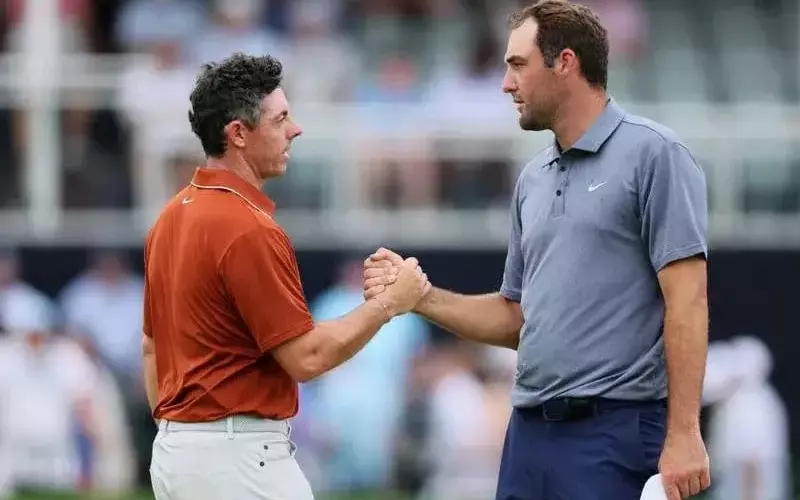
Rory McIlroy is making his return to the PGA Tour this week, participating in the Truist Championship at Quail Hollow Club. This appearance marks his first since his triumph at the Masters last month, where he successfully defended his title at Augusta National. In the current 2026 season, the six-time major champion has had a limited presence, with only five starts, one of which was cut short due to an injury. This restrained schedule has prompted McIlroy to comment on his approach, drawing comparisons to fellow golf luminary Scottie Scheffler, who has commenced nine tournaments this season.
McIlroy articulated that the judicious selection of tournaments by elite players, including himself and Scheffler, mirrors the strategic career path forged by golfing legend Tiger Woods. He stated that the ability to choose events based on optimal competitive advantage and personal readiness is a contemporary reality for top athletes in the sport. McIlroy underscored a pivotal realization: the enduring strength of professional golf lies in the collective platform of the PGA Tour itself, rather than in the transient presence of any single player. This perspective suggests that while individual stars contribute significantly, the overarching structure and brand of the tour possess a more fundamental and lasting value.
Ultimately, McIlroy advocates for a product-centric vision, emphasizing that delivering the most compelling golf experience, even if it means occasional absences from specific events by prominent players, serves the long-term interests of the sport. He notes that both he and Scheffler, now balancing demanding careers with growing family responsibilities, have found success in this selective participation model. Their consistent high performance, despite fewer appearances, underscores that strategic scheduling can effectively merge personal well-being with professional excellence, setting a precedent that benefits not only individual careers but also the dynamic evolution of professional golf.
The strategic decisions made by athletes like McIlroy and Scheffler exemplify how personal choices, when rooted in long-term vision and well-being, can harmonize with the broader objectives of a professional sport. Their approach, emphasizing quality over quantity, highlights a commendable balance that inspires both aspiring athletes and dedicated fans. This careful consideration of individual capacity and collective value paves the way for a more sustainable and compelling future for professional golf, where individual brilliance enhances, but does not overshadow, the enduring strength of the platform itself.