
Genesis: Crafting Its Own Legacy at the Pinnacle of Endurance Racing
Genesis Takes Center Stage: Beyond Just Racing
Genesis approached Le Mans with an ambition extending far beyond mere competition; it sought to be evaluated against the highest standards of automotive excellence. The atmosphere was already charged with excitement and anticipation even before the official start of the 24-hour race. Genesis's sophisticated three-story hospitality suite, positioned amongst legendary names like Ferrari, McLaren, Aston Martin, Ford, and BMW, served as a powerful symbol of its aspirations.
Elevating the Experience: Luxury in the Paddock
Stepping into the Genesis hospitality area at Le Mans felt like entering a different realm, a stark contrast to the track's frenetic energy. Air-conditioned comfort, a fully-stocked bar, continuous dining options featuring Korean delicacies and French pastries, all meticulously arranged, exemplified a deliberate attention to detail. This was Genesis's interpretation of 'Son-Nim,' the Korean philosophy of treating guests with utmost respect and care, translated into a premium motorsport experience.
Overcoming Perceptions: Earning Credibility
For much of its existence, Genesis has grappled with perception challenges, despite successfully producing compelling luxury vehicles. While it has rapidly expanded in the US, competing effectively on design, technology, and customer service, the greater hurdle remains: shedding the label of an 'alternative' brand and solidifying its standing alongside established luxury giants. Le Mans offered a compelling, if not definitive, answer to this challenge, serving as a bold declaration of its intentions.
Le Mans: The Ultimate Proving Ground for Automotive Aspirations
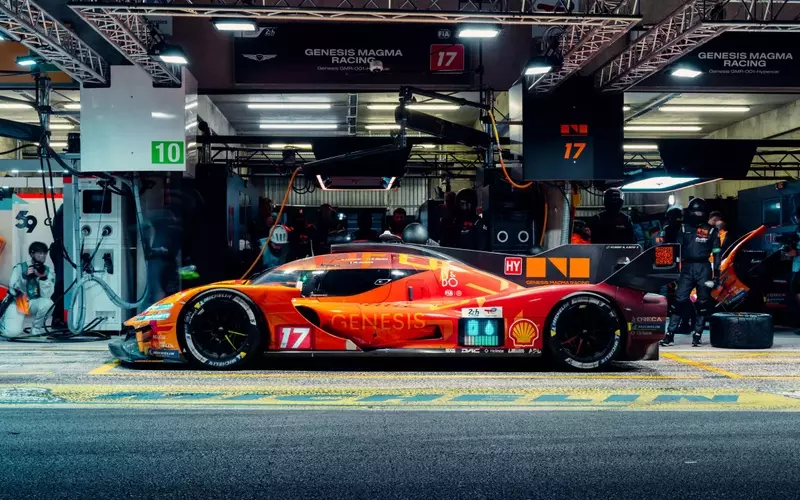
More than just a race, the 24 Hours of Le Mans was a comprehensive brand exercise for Genesis. The presence of two GMR-001 Hypercars, the Magma GT3 Concept, the updated Magma GT Concept, and the X Gran Convertible Concepts in the drivers' parade, all collectively articulated a broader message centered on European influence, performance, design, and unparalleled customer experience. This holistic approach suggested not merely a motorsport debut, but a concerted effort to create a contemporary automotive mythology.
A Legacy Forged Through Endurance: The Genesis Approach
Le Mans bestows numerous advantages upon manufacturers, offering a global platform, a grueling technical test, a powerful marketing tool, and a connection to rich automotive history. For Genesis, the stakes were even higher: it sought not just attention, but undeniable legitimacy. The brand's success with the GV70 and GV80 in the US laid a foundation of credibility, but luxury extends beyond product to perception and belief. Le Mans, a uniquely challenging arena, was chosen precisely for its ability to validate such claims.
The Unforgiving Nature of Le Mans: History's Scrutiny
The Circuit de la Sarthe is more than just a race track; it's a living archive where history constantly looms large. The echoes of past tragedies, such as the devastating 1955 accident, serve as a stark reminder of the inherent dangers and the sport's continuous evolution in prioritizing safety. Le Mans has historically tested not just speed, but courage, resilience, and the willingness to adapt.
Endurance Above All: The True Spirit of Le Mans
The experience of glamping trackside offered a unique perspective on Le Mans, from the midnight fireworks against the backdrop of relentlessly racing cars to the serene beauty of dawn. This continuous spectacle underscores a fundamental truth of endurance racing: while speed is important, the ultimate triumph lies in survival. Witnessing vehicles battered yet still performing at sunrise vividly illustrates the profound significance of durability.
The Price of Glory: Le Mans' Uncompromising Verdict
Even for the front-runners, Le Mans proved unforgiving. Toyota's hard-fought victory, narrowly edging out BMW, highlighted the intense competition and the fine margins separating triumph from disappointment. Cadillac and Ferrari, despite their strong starts, ultimately faced setbacks, reinforcing the enduring lesson of Le Mans: the race values what endures until the very end, irrespective of initial promise.
Genesis Achieves Its Objective: A Foundation for the Future
While Genesis's 13th-place finish with the #19 GMR-001 may not appear sensational on paper, it represents a significant achievement for a brand competing in its first 24-hour race at such a prestigious event. The retirement of the #17 car, though a setback, provided invaluable data and learning opportunities. Genesis's focus was not merely on winning, but on completing the race, learning from challenges, and refining its processes – a mindset aimed at fostering long-term corporate growth and brand development.
Magma: The Next Chapter in Genesis's Performance Story
The Magma GT3 Concept signals Genesis's commitment to performance beyond the Hypercar program, offering a more direct connection to potential customers. GT3 racing, where road-car identity converges with competitive motorsport, is a strategic move to build brand credibility. The GV60 Magma, as the first production model in this high-performance line, serves as a tangible link for buyers, demonstrating Genesis's ambition to create a distinct luxury performance ecosystem, rather than merely imitating established rivals.
Building a Unique Identity: Beyond German Luxury
Genesis's journey at Le Mans revealed its multifaceted strategy: simultaneous pursuit of Hypercar racing, GT3 development, Magma road cars, European market expansion, hybrid technology integration, and distinctive luxury hospitality rooted in its Korean heritage. This ambitious undertaking, though fraught with challenges, is designed to build a unique luxury identity that is precise, calm, attentive, and design-centric, rather than simply adopting existing European paradigms. For Genesis, finishing Le Mans was not an endpoint but a powerful beginning, demonstrating its resolve to forge its own heritage, lap by arduous lap.