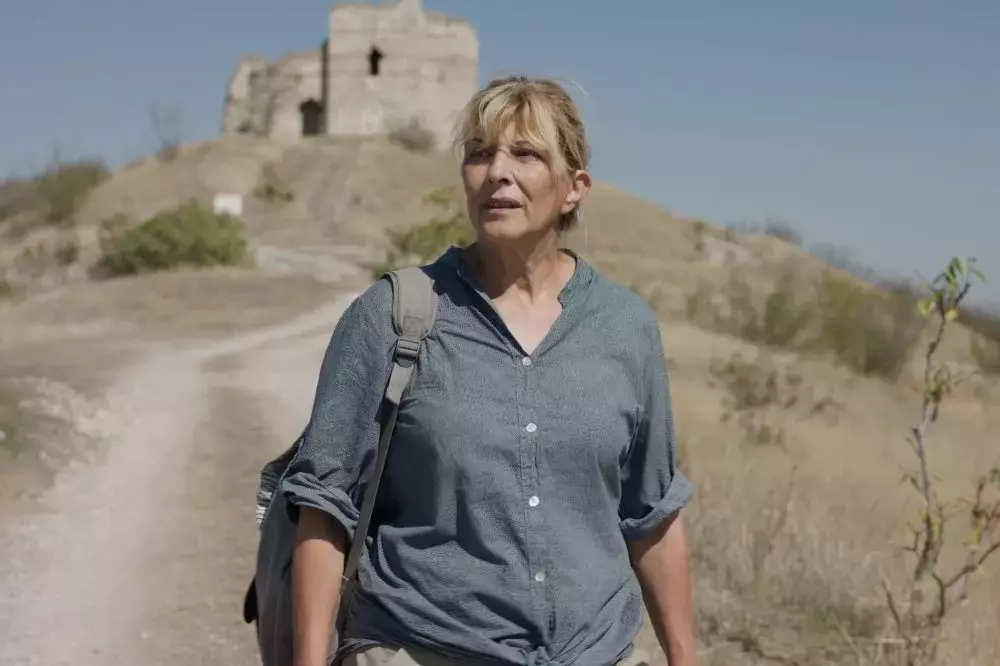
Valeska Grisebach's latest cinematic offering, 'The Dreamed Adventure,' transcends traditional filmmaking by masterfully blending the raw authenticity of a social drama with the expansive narrative of a crime epic. Set against the backdrop of the Bulgarian border, the film utilizes non-professional actors, creating an immersive experience that blurs the lines between reality and fiction. Its unique structure and compelling storytelling challenge conventional genre definitions, offering a deeply rewarding and thought-provoking cinematic journey.
Valeska Grisebach's 'The Dreamed Adventure' Premiers at Cannes Film Festival
On May 22, 2026, the highly anticipated film 'The Dreamed Adventure,' directed by the visionary German filmmaker Valeska Grisebach, was reviewed after its debut at the prestigious Cannes Film Festival on May 11, 2026. This cinematic achievement unfolds in the Bulgarian town of Svilengrad, a locale strategically positioned near both the Greek and Turkish borders, known for its bustling highway and as a transient point for millions. The story introduces Said (portrayed by Syuleyman Letifov), an auto-parts salesman, who returns to his hometown after a long absence. Upon discovering his car has been stolen from his lonely hotel, he unexpectedly reconnects with an old flame, Veska (Yana Radeva), who is overseeing an archaeological excavation nearby. This chance encounter propels Veska into a perilous investigation when Said mysteriously vanishes, leading her to navigate the complex criminal underworld of diesel trade and confront notorious figures like The Raven and Iliya (Stoicho Kostadinov), with whom she shares a complicated past. The narrative skillfully shifts focus to Veska, transforming her into an unlikely protagonist who uncovers the intricate layers of her community's hidden truths.
Grisebach’s directorial approach in 'The Dreamed Adventure' is a testament to her unique vision, transforming everyday life into a compelling genre narrative. The film challenges cinematic norms by casting a mature woman in a typically male-dominated role, subtly critiquing patriarchal power structures and societal oppression. Her ability to unearth profound insights from the ordinary, using an unpolished yet deeply authentic style, not only captivates but also inspires viewers to reconsider the overlooked details of human experience and the subtle power dynamics at play in close-knit communities. The film serves as a poignant reminder that truth, even in its rawest form, can be the most compelling and revolutionary storytelling device.