
Dior has a rich history of adorning prominent figures for their nuptials, a tradition recently continued by Taylor Swift, who, alongside Travis Kelce, chose the esteemed French fashion house for their Madison Square Garden ceremony. While many speculated Swift might opt for an American designer, her decision aligns with Dior's storied past of dressing American luminaries and European royalty. This compilation delves into the memorable instances where famous brides, spanning from Hollywood's Golden Age to contemporary pop icons, walked down the aisle in exquisite Dior creations, each gown a testament to the brand's enduring elegance and innovative design.
The Enduring Allure of Dior in Bridal Fashion
Dior's influence in the realm of bridal fashion is undeniable, marked by a succession of iconic gowns worn by celebrities and royals across generations. The brand's ability to fuse timeless elegance with contemporary flair has made it a preferred choice for women seeking a blend of tradition and individuality on their wedding day. Each Dior wedding dress tells a unique story, reflecting not only the personal style of the bride but also the prevailing fashion trends and cultural contexts of its time. From understated sophistication to extravagant grandeur, Dior has consistently delivered sartorial masterpieces that transcend fleeting trends, cementing its status as a paragon of bridal excellence.
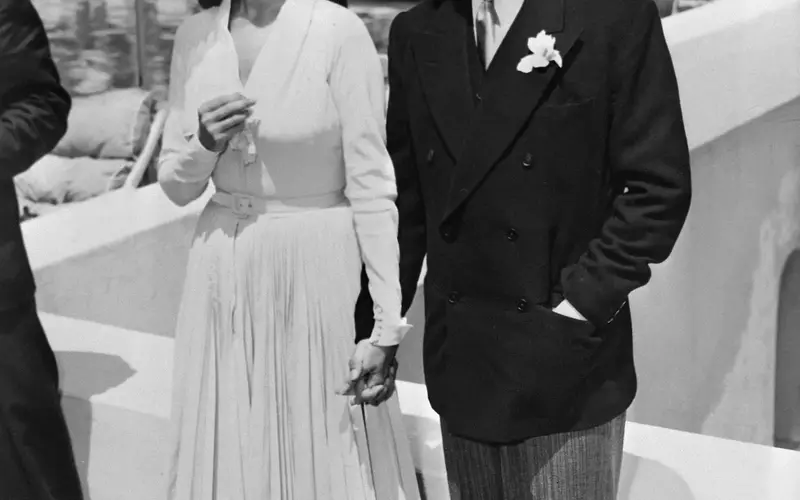
The narrative of Dior's bridal legacy commences with figures like Rita Hayworth, whose unconventional pale blue tea dress challenged traditional norms in 1949, setting a precedent for individual expression. Queen Soraya of Iran's 1951 gown, a masterpiece of opulence adorned with thousands of diamonds and feathers, exemplifies the brand's capacity for extravagant luxury, albeit with practical considerations for the winter wedding. Olivia de Havilland's choice of a tailored Dior suit in 1955 showcased a preference for refined simplicity, reflecting her personal relationship with Christian Dior himself. The 1970s and 80s saw Marc Bohan's designs for royal brides, including Queen Silvia of Sweden and Princess Caroline of Monaco, emphasizing understated elegance and personal suitability. Queen Noor of Jordan's simple yet elegant silk crepe dress from 1978 highlighted cultural sensitivities and individual comfort. Later, Gwen Stefani's avant-garde, hand-dyed gown in 2002, designed by John Galliano, broke new ground with its punk-rock sensibility. More recently, Maria Grazia Chiuri's designs for supermodels Miranda Kerr in 2017 and Karlie Kloss in 2018 demonstrated a return to classic silhouettes with modern interpretations, often drawing inspiration from Grace Kelly's iconic style, thereby continuing Dior's rich tapestry of bridal innovation.
Iconic Dior Creations: A Journey Through Time
The journey through Dior's bridal archives reveals a fascinating evolution of design, catering to diverse tastes and monumental occasions. From the unexpected pale blue chosen by Rita Hayworth to the diamond-encrusted splendor of Queen Soraya's gown, each creation reflects a moment in history and a distinctive bridal vision. Dior's designers, from Christian Dior himself to John Galliano and Maria Grazia Chiuri, have consistently pushed boundaries while maintaining the house's signature sophistication, ensuring that each wedding dress remains a timeless symbol of beauty and craftsmanship. These gowns are not merely garments; they are historical artifacts that encapsulate the dreams and aspirations of their wearers, echoing through the annals of fashion history.
Dior's profound impact on bridal fashion is exemplified by an array of legendary creations. Rita Hayworth's choice of a subtle blue tea dress by Dior for her 1949 wedding was a striking departure from convention, showcasing a sophisticated yet understated elegance. Queen Soraya of Iran's wedding in 1951 featured an extraordinarily elaborate Dior gown, notable for its vast quantities of silver lamé, diamonds, and marabou feathers, creating a spectacle of unparalleled luxury and illustrating Dior's ability to craft garments of immense grandeur. Olivia de Havilland, marrying in 1955, opted for a sophisticated tailored suit from Dior, a reflection of her personal bond with the designer and a testament to the brand's versatile design philosophy. The 1976 wedding of Queen Silvia of Sweden saw Marc Bohan design an ivory silk satin dress that balanced regal bearing with personal comfort, a principle he extended to Princess Caroline of Monaco's civil and church ceremony dresses in 1978, which blended traditional elements with contemporary style. In the same year, Bohan also created a simple silk crepe gown for Queen Noor of Jordan, reflecting her preferences and cultural values. Fast forward to 2002, Gwen Stefani's wedding dress, designed by John Galliano, was a vibrant, hand-sprayed magenta creation that encapsulated her punk-rock persona, demonstrating Dior's capacity for avant-garde expression. Miranda Kerr's 2017 gown, a high-necked, long-sleeved dress with intricate appliqué flowers by Maria Grazia Chiuri, paid homage to Grace Kelly's iconic look, symbolizing a return to classic, modest elegance. Finally, Karlie Kloss's 2018 wedding dress, also by Chiuri, featured a sweetheart neckline and delicate lace sleeves, a testament to the meticulous craftsmanship and hours of labor involved, further solidifying Dior's position as a purveyor of dreamlike bridal couture.