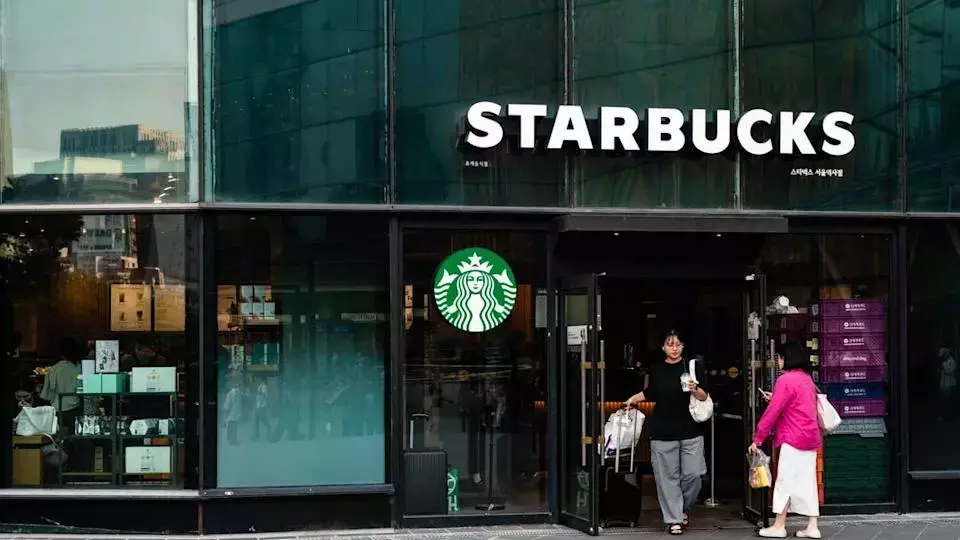
Financial analyst Jim Cramer has recently issued a striking recommendation for investors to acquire Starbucks stock, indicating his strong conviction in the coffee giant's strategic recovery. This comes after a challenging period for the brand, which saw declining sales and customer satisfaction. The company's recent performance metrics, however, suggest a positive shift, with growth in comparable sales and increased customer transactions, particularly within the U.S. market. Cramer's direct advice, deviating from his usual cautious approach, underscores a belief that Starbucks is on a stable path to revitalization.
For approximately two years, Starbucks faced significant headwinds. Customers reported longer wait times and perceived higher prices, contributing to a slump in same-store sales. This downturn prompted a leadership change, with a new chief executive, Brian Niccol, joining from Chipotle. Niccol embarked on a mission to rejuvenate the company, a process he acknowledged would require time. Wall Street's initial reaction was cautious, treating the stock with skepticism as investors questioned the brand's long-term growth prospects amidst a challenging economic environment where discretionary spending, such as on premium coffee, was easily reduced.
Despite the prevailing skepticism, Jim Cramer's perspective evolved significantly. On May 28, he published a concise yet impactful message on X, urging investors to "Just go buy Starbucks already." This bold statement from the "Mad Money" host marked a clear departure from his prior stance of encouraging patience. His unreserved endorsement highlights a newfound confidence in Starbucks' trajectory, stemming from observable improvements in the company's operational and financial health. This shift is particularly noteworthy given Cramer's long-standing ownership of Starbucks shares through his Charitable Trust.
The underlying improvements at Starbucks are evident in its recent financial reports. The company's previous struggles were partly attributed to an over-reliance on mobile ordering, leading to understaffed stores and slower service. In response, Niccol's "Back to Starbucks" plan focused on a more traditional approach: increasing staffing to improve service efficiency. This strategy appears to be yielding positive results. In the fiscal first quarter of 2026, Starbucks reported a 4% rise in global comparable sales and, for the first time in eight quarters, an increase in U.S. transactions. Revenue climbed to $9.9 billion, a 6% increase, prompting the CEO to declare the company "ahead of schedule."
This momentum continued into the fiscal second quarter of 2026, with comparable sales jumping by 6.2% and revenue reaching $9.5 billion, a 9% rise. Management subsequently raised its full-year guidance, further signaling a robust recovery. Additionally, Starbucks strategically divested a 60% stake in its China business to Boyu Capital for $4 billion, effectively addressing a significant operational overhang. The full China operation is now valued at over $13 billion, including the retained stake and future licensing fees. This timeline of late 2024 (Niccol's arrival and the launch of the recovery plan), the fiscal first quarter 2026 results, the November 2025 China deal, and the fiscal second quarter 2026 performance collectively illustrate the significant turnaround. The stock's performance reflects this, trading near $102 in late May, marking a 20% increase year-to-date in 2026 and approaching its 52-week high.
While the recovery is undeniable, investors should consider the current valuation. With a forward earnings multiple of approximately 43, Starbucks is priced as a company that has already achieved significant success, even though the turnaround is still in progress. Profit margins are improving but not fully healed, and analysts predict only single-digit upside from current levels. Nevertheless, the company offers a quarterly dividend yield of around 2.5%, providing a return for patient shareholders. The key indicator to monitor, according to Cramer's implied message, is the consistent growth in transaction volume, which signifies the return of daily customer habits and directly correlates with the stock's upward movement. Cramer's confidence rests not merely on the brand's image or product, but on the sustained increase in repeated customer purchases, anticipating further market appreciation as this trend continues into 2027.