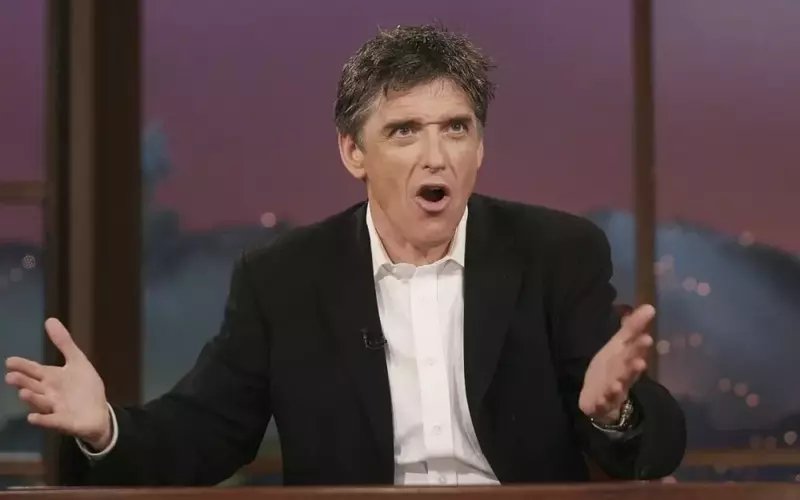

Craig Ferguson, the former host of CBS's "The Late Late Show," recently shared his thoughts on his decision to step down from the program before Donald Trump assumed the presidency. Speaking on "Obsessed: The Podcast," Ferguson expressed a sense of contentment regarding the timing of his departure, acknowledging the challenges he might have faced in the highly politicized late-night television landscape that emerged during Trump's term. He deliberately differentiated his show's style from the more overtly political commentary adopted by other hosts, such as Stephen Colbert and Jimmy Kimmel.
Former 'Late Late Show' Host Craig Ferguson Reflects on His Exit Amidst Evolving Political Climate
In a recent candid discussion on "Obsessed: The Podcast," which aired on June 9, 2026, Craig Ferguson, who previously helmed "The Late Late Show" on CBS, voiced his satisfaction with concluding his hosting duties before the election of Donald Trump. Ferguson, a prominent figure in late-night television, conveyed uncertainty about how he would have managed his show's content had it continued into the Trump administration. He elaborated that while he believed he possessed the skills to navigate such a period, he was ultimately grateful not to have been put in that position. His departure from "The Late Late Show" in December 2014 preceded Trump's presidential victory by two years, paving the way for James Corden to take over the hosting role. Ferguson also disclosed that he had initially considered leaving the show even earlier but was persuaded to extend his contract by CBS with an improved offer. He emphasized that for him, comedy, much like life itself, is fundamentally about opportune timing. During his time as host, Ferguson consciously steered his show away from the traditional late-night format, often asserting that his program was distinct from typical talk shows and that he himself did not fit the archetype of a conventional late-night host. He maintained that his show evolved beyond its initial conception and that his experiences during his tenure did not provide a unique perspective on the current or past political climate. This stance contrasts sharply with the approach of hosts like Stephen Colbert and Jimmy Kimmel, who have openly engaged in political satire and criticism of the Trump administration, often becoming vocal figures of resistance within the media landscape.
Ferguson's reflections offer a compelling insight into the evolving nature of late-night television and the pressures faced by its hosts in an increasingly polarized political environment. His decision to step away before the political maelstrom of the Trump era highlights a preference for a different kind of comedic engagement, one less entangled with direct political commentary. This perspective invites us to consider the various roles late-night shows play in society, from pure entertainment to political satire, and how hosts navigate these often-conflicting demands. It also underscores the personal choices made by public figures in maintaining their artistic integrity and personal well-being in the face of intense public scrutiny and political fervor.