
Christopher Nolan's cinematic interpretation of Homer's ancient Greek epic, "The Odyssey," has ignited considerable discussion due to its unconventional creative choices. Nolan opted for contemporary English dialogue, delivered predominantly in American accents, departing from a historically accurate portrayal. This decision, along with casting widely recognized actors and defending artistic choices regarding costume design and an unexpected casting of a rapper, reflects Nolan's vision to make the timeless narrative accessible and emotionally resonant for modern audiences.
The film's approach to language and casting aims to bridge the gap between an ancient text and contemporary viewership, despite potentially drawing criticism for its historical liberties. Nolan's justifications highlight a focus on emotional impact and broad appeal, demonstrating a deliberate strategy to reimagine classical storytelling for the current era.
Nolan's Linguistic Approach in 'The Odyssey'
Christopher Nolan's decision to employ contemporary English dialogue, often delivered with American accents, in his film adaptation of Homer's "The Odyssey" was a deliberate stylistic choice. He aimed to prioritize emotional resonance over strict linguistic fidelity to the original ancient Greek epic. Nolan stated that this approach was a "no-brainer" for him, driven by a desire for the language to evoke emotional, rather than purely intellectual, meaning for the audience. This creative liberty, while sparking debate, underscores his intention to make the narrative more relatable and impactful for modern viewers who might otherwise find ancient dialects or overly formal language a barrier to engagement.
Nolan's rationale for this linguistic modernism stemmed from his role as the film's screenwriter, where he sought to craft a narrative that would deeply connect with contemporary audiences. By using familiar speech patterns and accents, he intended to create an "earthy narrative" that would feel immediate and accessible. This choice reflects a broader directorial philosophy of adapting classic material in a way that resonates with present-day sensibilities, even if it meant risking criticism for historical inaccuracy. His unwavering commitment to this vision highlights a belief that emotional connection is paramount in bringing an ancient tale to life on the big screen.
Casting Choices and Artistic Defenses
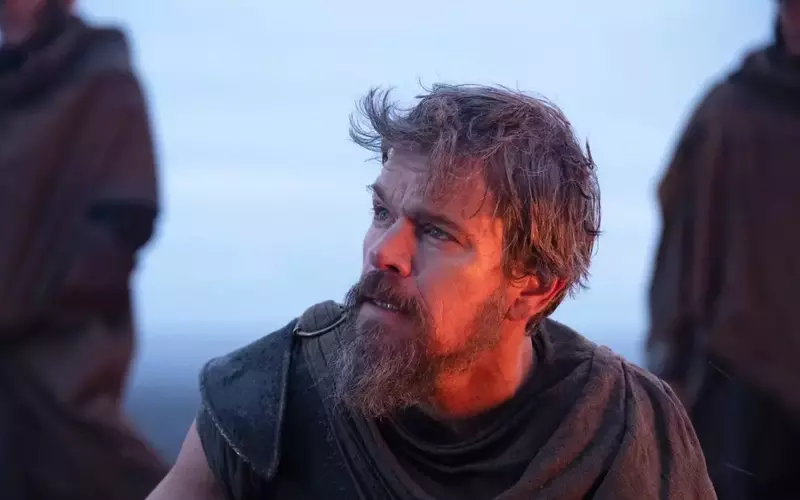
Beyond the linguistic decisions, Christopher Nolan's casting choices for "The Odyssey" were equally strategic, focusing on bringing a star-studded ensemble to the screen. He intentionally cast major actors like Matt Damon, Anne Hathaway, Tom Holland, Zendaya, Charlize Theron, Robert Pattinson, and Lupita Nyong'o, believing their familiar faces would help audiences connect with the mythological figures. Nolan viewed these characters as "iconic in some ways," and therefore sought the "finest bunch of actors" to embody them, enhancing the film's accessibility and appeal to a wide contemporary audience by leveraging established star power.
Nolan also proactively addressed other points of contention, such as the film's armor design, which drew comparisons to Batman's Batsuit, and the casting of rapper Travis Scott as a bard. He defended the armor design by referencing historical Mycenaean daggers and the use of expensive materials for characters like Agamemnon to convey their elevated status. Regarding Scott's casting, Nolan explained it as a nod to the oral tradition of poetry, drawing an analogy between ancient bards and modern rap, thereby framing both casting and design choices as thoughtfully conceived elements integral to his contemporary reinterpretation of "The Odyssey."