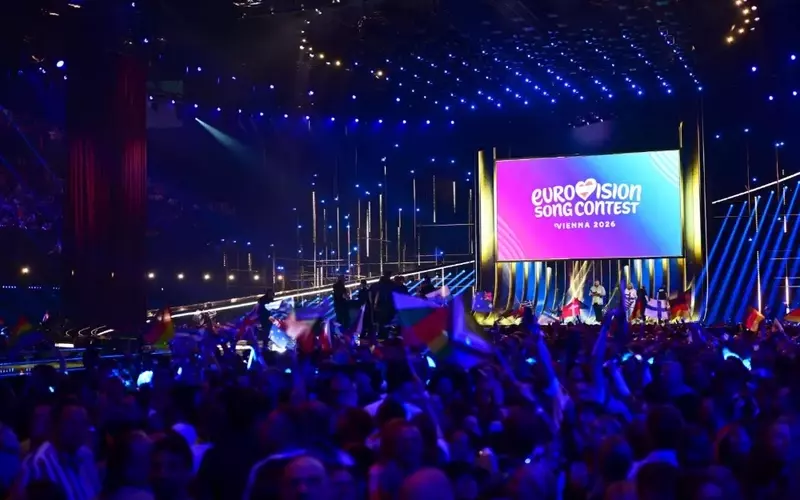

Canada's official entry into the European Broadcasting Union (EBU) marks a significant milestone, opening the door for the North American nation to participate in the renowned Eurovision Song Contest. This strategic move, effective from next year, is widely seen as an initiative to foster stronger European economic and political relationships. The Canadian public has long demonstrated a fervent passion for the competition, consistently showing high engagement in voting and ticket sales, even prior to formal eligibility. The country has a historical connection to Eurovision, with past Canadian artists representing other nations and achieving notable success, underscoring a deep-seated appreciation for the event's unique cultural exchange.
Canada Embraces Eurovision: A New Era of Cultural Exchange
On July 1, 2026, a new chapter unfolded for Canada and the Eurovision Song Contest. Following a decisive vote at the European Broadcasting Union's general assembly in Prague, Canada was formally inducted as a full member of the EBU. This membership grants Canada the long-awaited opportunity to participate in the annual song competition, with official confirmation arriving today that the nation intends to field a contestant next year. This development is believed to be spearheaded by Canadian Prime Minister Mark Carney, who reportedly included the initiative in his 2025 budget. While the extent of his personal affinity for Eurovision remains unconfirmed, his past residency in the U.K. as Governor of the Bank of England suggests a familiarity with European cultural dynamics, aligning with a broader strategy to forge closer ties with the continent. Despite their previous inability to formally compete, Canadians have consistently displayed an extraordinary level of engagement, ranking among the top three in the "rest of the world" vote during this year's contest in Vienna and forming a significant portion of international ticket buyers for the semi-final and grand final events. Historically, Canadian talent has graced the Eurovision stage through other countries. Most famously, Céline Dion, representing Switzerland in 1988, secured a dramatic victory by a single point, etching her name into Eurovision history. Two years prior, in 1986, Sherisse Laurence made her mark as the first Canadian to participate, competing for Luxembourg and achieving an impressive third-place finish. Canada will unveil its selection process for its inaugural official contestant later this year. The inclusion of Canada follows a precedent set by other non-European nations like Australia, which joined in 2015, and Israel, a participant since 1973. Both countries have achieved considerable success, with Israel's Noam Bettan securing second place and Australia's Delta Goodrem ranking fourth in this year's competition, which saw Bulgaria's Dara clinch the top spot. The Eurovision Song Contest, which celebrated its 70th anniversary last year and captivated 131 million viewers across 35 television markets this year, has been actively expanding its global reach. While an American adaptation in 2022 did not gain traction, an Asian spin-off is slated to launch in Thailand in November. Furthermore, a Broadway production inspired by Will Ferrell's 2020 film, "Eurovision Song Contest: The Story of Fire," is currently in development.
Canada's entry into Eurovision is more than just a musical endeavor; it's a vibrant expression of cultural diplomacy and a testament to the universal appeal of music. This move not only provides Canadian artists with an unparalleled international platform but also deepens the cultural bonds between Canada and Europe. It highlights the evolving nature of global entertainment, where geographical boundaries are increasingly blurred by shared passions and artistic collaboration. The enthusiasm shown by Canadian audiences even before official participation underscores the power of cultural events to transcend borders and foster a sense of global community.