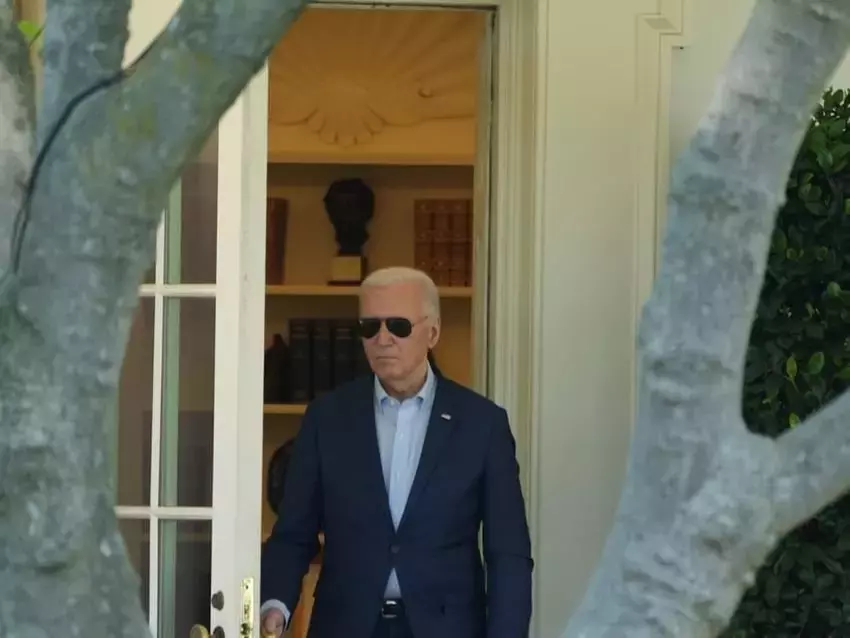
Former U.S. President Joe Biden has initiated legal proceedings against the Justice Department, seeking to prevent the public disclosure of his confidential discussions with his memoir's ghostwriter. This lawsuit, filed in a Washington, D.C. federal court, is a direct response to a 2024 Freedom of Information Act request made by the conservative Heritage Foundation. The Foundation also pursued a separate legal challenge to gain access to Biden's conversations with Mark Zwonitzer, which occurred during the creation of his book, "Promise Me, Dad: A Year of Hope, Hardship, and Purpose." The Justice Department initially denied these requests, citing exemptions from disclosure. However, following the return of President Donald Trump to the White House for a second term, the Department reversed its decision. Biden's attorney, Amy Jeffress, noted this change in the lawsuit, stating that the Department informed Biden in February of its intent to release the recordings and transcripts, with limited redactions, to the Heritage plaintiffs and Congress by June 15. This legal battle emerges amidst renewed scrutiny of Biden's cognitive fitness, a debate that intensified after the public release of audio recordings from his 2023 interview with special counsel Robert Hur.
Biden's Legal Battle to Protect Private Conversations Sparks Political Firestorm and Cognitive Scrutiny
In a significant legal development on Tuesday, May 27, 2026, former U.S. President Joe Biden launched a lawsuit in a federal court in Washington, D.C. against the Justice Department. The core of Biden's legal challenge is to block the release of his private conversations with Mark Zwonitzer, the ghostwriter for his memoir. This action stems from a Freedom of Information Act (FOIA) request filed in 2024 by the conservative organization, the Heritage Foundation, which subsequently escalated its pursuit through a separate lawsuit seeking access to these discussions. Initially, the Justice Department cited disclosure exemptions to withhold the materials. However, a notable shift occurred after President Donald Trump's return to the White House for a second term. According to Amy Jeffress, Biden's attorney, the Department reversed its stance and, in February, communicated its plan to release the recordings and transcripts to the Heritage plaintiffs and Congress by June 15. Biden's legal team argues that these personal conversations, conducted within his home, are protected under FOIA laws, asserting that every American, including former Vice Presidents, has a right to such privacy. This high-profile lawsuit has not only drawn a sharp response from former President Trump, who derisively called Biden a "Crooked Politician!!!" on his Truth Social platform, but has also reignited widespread public debate regarding Biden's cognitive state. This renewed scrutiny is particularly pronounced given the earlier release of audio from his 2023 interview with special counsel Robert Hur, which reportedly highlighted memory lapses previously disputed by the White House, although Hur ultimately decided against criminal charges.
This ongoing legal dispute and the accompanying political commentary underscore the delicate balance between government transparency and individual privacy, especially concerning public figures. It also highlights the persistent political polarization, where every action by one party is met with swift and often aggressive counter-narratives from the other. As a society, we must consider the implications of such disclosures on the willingness of individuals, especially those in high office, to engage in candid discussions essential for the historical record. While transparency is vital for accountability, it should not come at the cost of deterring honest and private reflection. Furthermore, the relentless focus on cognitive health, while understandable for a leader, risks becoming a tool for political manipulation, distracting from substantive policy debates. Moving forward, a more nuanced approach is needed that respects privacy rights while upholding the public's right to information, ensuring that political discourse remains constructive rather than purely adversarial.