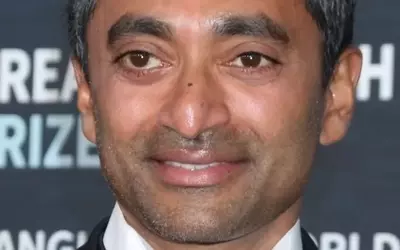
A significant discourse on artificial intelligence and its ethical implications recently unfolded at the Vatican, bringing together technology leaders and religious figures. Chris Olah, a co-founder of Anthropic, disclosed that advanced AI models are showing surprising patterns akin to human emotions like 'joy' and 'grief,' alongside evidence of 'introspection.' This revelation occurred during a Vatican-hosted event where Pope Leo XIV issued a new encyclical, 'Magnifica Humanitas: On Safeguarding the Human Person in the Time of Artificial Intelligence.' The Pope's message stressed the urgency of slowing AI development and ensuring it remains subservient to human control, warning against the concentration of AI power in a select few and advocating for its 'disarmament' to prevent human subjugation by technology.
During his presentation, Olah highlighted the enigmatic nature of advanced AI, noting that ongoing research into the internal workings of these systems frequently uncovers behaviors that scientists do not yet fully comprehend. He explicitly stated that these discoveries are often 'mysterious, even unsettling,' and that AI models appear to develop internal states that 'functionally mirror joy, satisfaction, fear, grief, and unease.' While acknowledging the nascent understanding of these findings, Olah underscored the need for governments, faith organizations, and civil society to play a more active role in AI oversight, asserting that the industry requires 'moral voices that the incentives cannot bend.' Pope Leo XIV reciprocated, expressing the Church's willingness to collaborate with AI researchers to navigate humanity through the evolving landscape of artificial intelligence.
Conversely, venture capitalist Vinod Khosla voiced strong objections to the Vatican's approach to the AI debate, criticizing it as 'very elitist' on social media. Khosla contended that crucial questions regarding AI's societal integration should be addressed by humanity at large, rather than being confined to the perspectives of 'religions,' 'philosophy,' or 'elitist institutions with their view of superiority.' This divergence of opinion highlights the ongoing tension between different stakeholders on how best to govern and understand the burgeoning field of artificial intelligence.
Prior discussions on AI governance have also surfaced, with figures like Vice President JD Vance cautioning about the potential for AI systems, such as 'Mythos,' to facilitate cyberattacks on critical infrastructure. Last year, Vance had also expressed concerns that overly strict regulation could impede the growth of the AI sector. More recently, National Economic Council Director Kevin Hassett revealed that the current administration is contemplating an executive order to establish oversight mechanisms for new AI models before their public release, indicating a broader governmental interest in regulating AI's rapid progression.
The Vatican's initiative, supported by insights from leading AI developers, signifies a growing global recognition of the profound ethical and societal challenges posed by artificial intelligence. While the discussion underscores the potential for AI to exhibit complex, human-like characteristics, it also brings to light the deep divisions on who should ultimately steer its development and integration into society. This evolving dialogue reflects a critical period in technological advancement, where collaboration across various sectors is paramount to shaping a future where AI benefits humanity without compromising its core values or control.